Info
The quintessential soundtrack of a Mediterranean summer, the Ash Cicada is more often heard than seen. Known for its rhythmic, clicking song that intensifies with the afternoon heat, this insect has been a symbol of the sun-drenched hills of Southern Europe and the Middle East for millennia. While its loud "buzzing" can be intimidating to some, it is a harmless vegetarian that spends most of its life hidden away from the world.
🔍 How to Identify
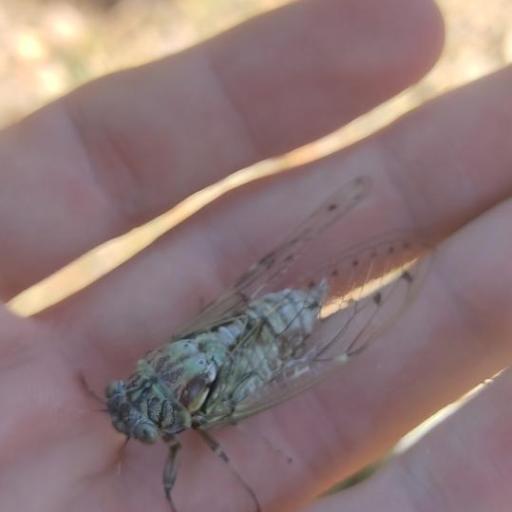
- 🪟 Wing Patterns: Look for large, transparent wings held tent-like over the body. A key identifier for this specific species is a series of small, distinct black spots along the veins near the tips.
- 🦎 Cryptic Coloring: Its body is a masterful blend of mottled gray, brown, and silver. This "camouflage suit" allows it to vanish perfectly against the bark of olive or ash trees.
- 👁️ Wide-Set Eyes: It possesses two large, prominent compound eyes on the sides of its head, giving it a wide field of vision to spot approaching predators or curious humans.
🌲 Habitat & Ecology
- 🌳 The Sap Sucker: Despite its "scary" size, the Ash Cicada feeds exclusively on plant sap. It uses a straw-like mouthpart to pierce the bark of trees—most notably the Manna Ash (Fraxinus ornus)—to drink the sugary lifeblood of the plant.
- 🥁 The Drummer's Secret: Only the males sing. They don't use vocal cords; instead, they have specialized membranes called tymbals on their abdomen. By vibrating these rapidly, they create a sound that can be heard from hundreds of yards away to attract mates.
- ⏳ Life in the Dark: Before you see them in the trees, they spend several years underground as nymphs, tunneling through the soil and feeding on root sap before emerging for a final, sun-filled few weeks of adulthood.
⚠️ Safety & Toxicity
- 🛡️ Completely Harmless: The Ash Cicada is a "gentle giant." It does not bite, sting, or carry venom. It has no interest in humans or pets.
- 🚫 Mistaken Identity: If one lands on you, it might occasionally "test" your skin with its proboscis, mistaking you for a salty tree branch. This isn't a bite, but a tiny, harmless pinch that doesn't break the skin.
✨ Fun Fact
Ancient Greeks admired the cicada so much they believed they lived on dew alone and were "bloodless" beings. They were often kept in cages as "musical pets" and were considered symbols of rebirth and immortality.
More Details








