Info
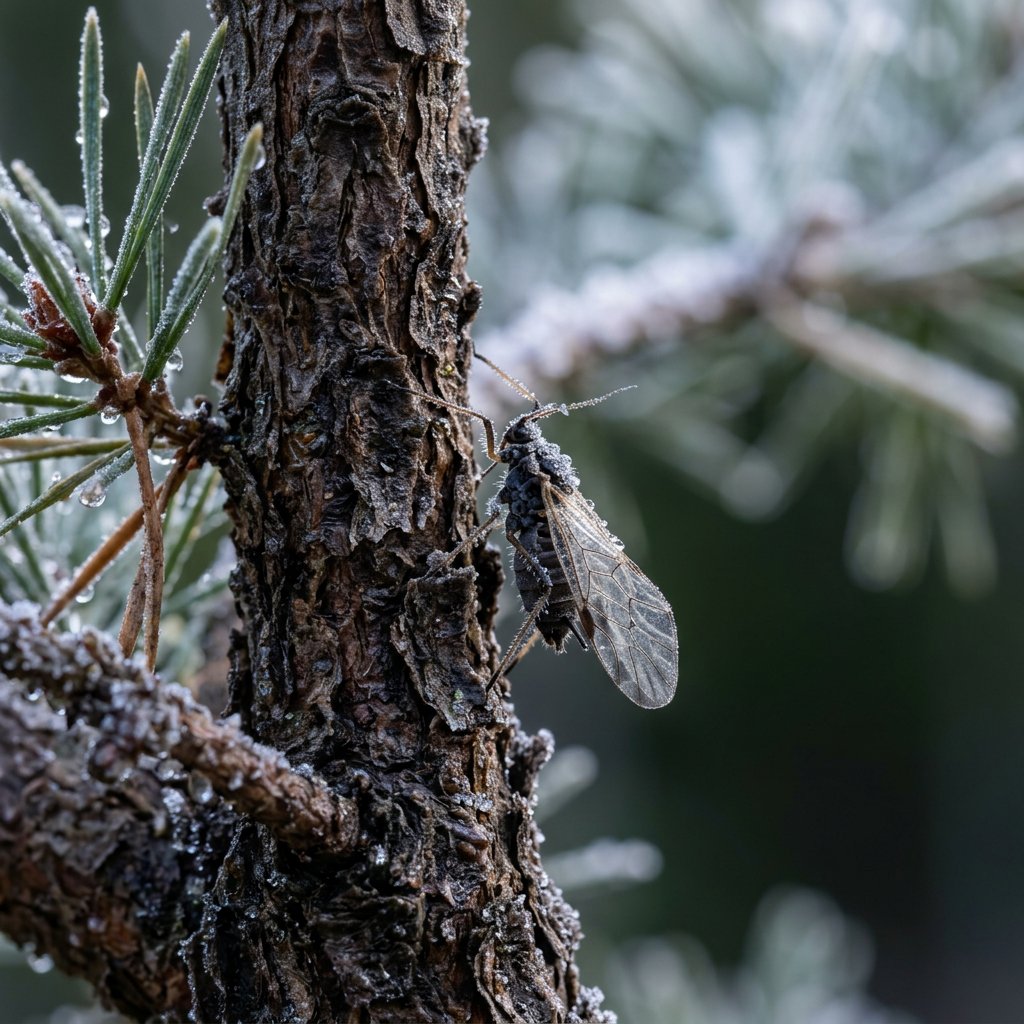
Often called "Giant Conifer Aphids," these leggy travelers are the gentle giants of the aphid world. While most aphids are tiny specks, Cinara species are large enough to be mistaken for small spiders as they scurry along pine and spruce branches. They are famous for their symbiotic relationship with ants and their tendency to occasionally "hitchhike" into homes on fresh-cut Christmas trees during the winter.
🔍 How to Identify
- 🕷️ Long Legs: Unlike their sedentary cousins, these aphids have remarkably long, spindly legs that allow them to move quickly across rough bark.
- 🍐 Large Body: They possess a distinct pear-shaped or globular body that is significantly larger than typical garden aphids, often reaching 3 to 5mm in length.
- 🌑 Camouflage Colors: Most species are dark brown, charcoal black, or dull gray, sometimes featuring a light "dusting" of white wax to blend in with tree bark and needles.
🌲 Habitat & Ecology
- 🌲 Conifer Specialists: You will find them exclusively on coniferous trees like Pines, Firs, Cedars, and Spruces. They prefer to cluster on the undersides of branches or tucked into the crevices of the trunk.
- 🐜 The Ant Connection: They are "farmed" by ants. Cinara aphids excrete a sugary liquid called honeydew; in exchange for this sweet treat, ants will aggressively protect the aphids from predators like ladybugs and lacewings.
- 💧 Sooty Mold: If a colony is large, the excess honeydew they drop can lead to the growth of a black, harmless fungus called "sooty mold" on the needles below.
⚠️ Safety & Toxicity
- ✅ Harmless to Humans: Cinara insects do not bite, sting, or transmit diseases to people or pets. They are purely sap-feeders interested in trees, not humans.
- 🏠 Indoor Nuisance: When brought inside on a Christmas tree, the warmth of the house can trick them into thinking it's spring. They may crawl off the tree, but they cannot survive for long in a home environment and will not infest your furniture or pantry.
✨ Fun Fact
Many Cinara species are so well-camouflaged that they look exactly like the small resin beads or buds on a pine twig. This "crypsis" helps them hide in plain sight from hungry birds!
More Details








