Info
Often called the Chain-dotted Geometer, this moth is a master of daytime elegance. While most moths hide under the cover of darkness, this species flutters through sunny fields and woodland edges, looking more like a misplaced scrap of delicate lace than a typical insect. It is a member of the "inchworm" family, known for the charming, looping way its caterpillars navigate the world.
🔍 How to Identify
- 🦋 The Wings: Brilliant white and translucent, decorated with two distinct rows of small, black "chain-link" dots that follow the curve of the wing.
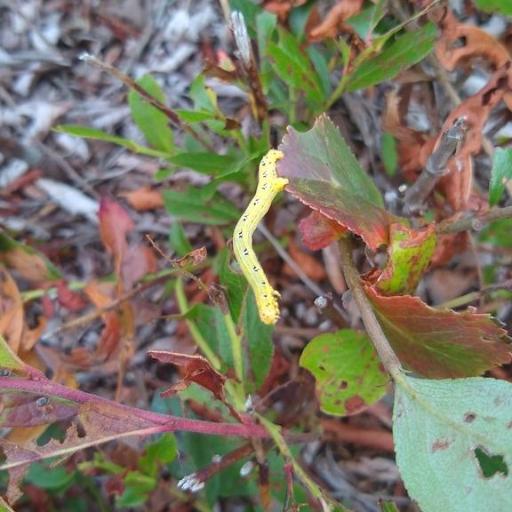
- 📏 The Larva: A classic "measuring worm" (caterpillar) that is cream or bright yellow with striking black spots and stripes along its sides.
- 🕊️ Flight Style: Unlike the rapid, vibrating flight of many moths, this species has a slow, erratic, and fluttery movement, often staying low to the ground.
🌲 Habitat & Ecology
- 🌿 A Diverse Palette: These caterpillars are generalist feeders, meaning they enjoy a wide variety of plants. You’ll often find them munching on blueberry bushes, sweetfern, bayberry, and even birch or willow trees.
- 🍂 Autumn Flutterer: While many insects disappear as the weather cools, the Chain-dotted Geometer is a late-season specialist, with adults typically emerging in September and October to mate.
- 🕸️ The Cocoon: Instead of a thick silk bag, they spin a very loose, mesh-like "hammock" between leaves, allowing you to see the pupa resting inside.
⚠️ Safety & Toxicity
- ✅ Status: Entirely harmless.
- 🛡️ Details: This moth does not bite, sting, or carry any toxins. Even the caterpillars lack the irritating hairs found on some other species, making them safe for curious kids and pets to observe closely.
✨ Fun Fact
The scientific name catenaria comes from the Latin word catena, which translates to "chain." It’s a perfect description for the "stitching" of black dots that look like a fine silver chain draped across the moth's wings!
More Details








