Info
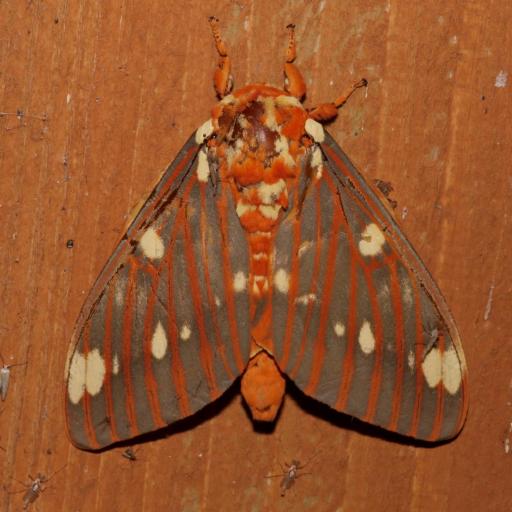
Known as the "Regal Moth" in its adult form and the "Hickory Horned Devil" as a larva, Citheronia is a true titan of the insect world. Often mistaken for a creature of myth due to its massive size and "dragon-like" horns, this moth is one of the most spectacular sights a nature lover can find in North America.
🔍 How to Identify
- 🐛 The "Devil" Larva: The caterpillar is unmistakable—it can grow up to 6 inches long, appearing turquoise-green with massive, curved orange horns tipped in black.
- 🦋 Royal Wings: The adult moth features a regal color palette of burnt orange, slate gray, and bright yellow spots across a heavy, velvet-textured body.
- 📏 Grand Scale: These are among the largest moths in temperate regions, with a wingspan that can reach nearly 6 inches, making them look like small birds in flight.
🌲 Habitat & Ecology
- 🌳 The Canopy Kitchen: You will most likely find these in deciduous forests. The larvae are specialized feeders, preferring the leaves of Hickory, Walnut, Persimmon, and Sweetgum trees.
- 🌙 A Short, Busy Life: Once they emerge from their pupa as moths, they have no mouthparts and cannot eat. They live for only about a week, spending every ounce of energy searching for a mate under the cover of night.
- 🍂 Winter Nap: Unlike many other moths that spin cocoons in trees, Citheronia caterpillars burrow into the soil to pupate, staying underground through the winter.
⚠️ Safety & Toxicity
- 🛡️ Harmless Bluff: Despite the "Hickory Horned Devil" name and its intimidating, prickly appearance, this insect is completely harmless. It has no stinger and no venom.
- 🐾 Pet Safety: They are not toxic to pets or humans, though their large size might give a curious dog a bit of a startle!
- ✋ Gentle Handling: If you find a caterpillar on the ground, it is likely looking for a place to burrow. You can gently move it, but be prepared—they are surprisingly heavy and muscular.
✨ Fun Fact
- ✨ The Fasting Giant: Because the adult Regal Moth lacks a digestive system, it survives entirely on the "snacks" it ate months prior as a caterpillar. It is a biological masterpiece of energy storage!
More Details








