Info
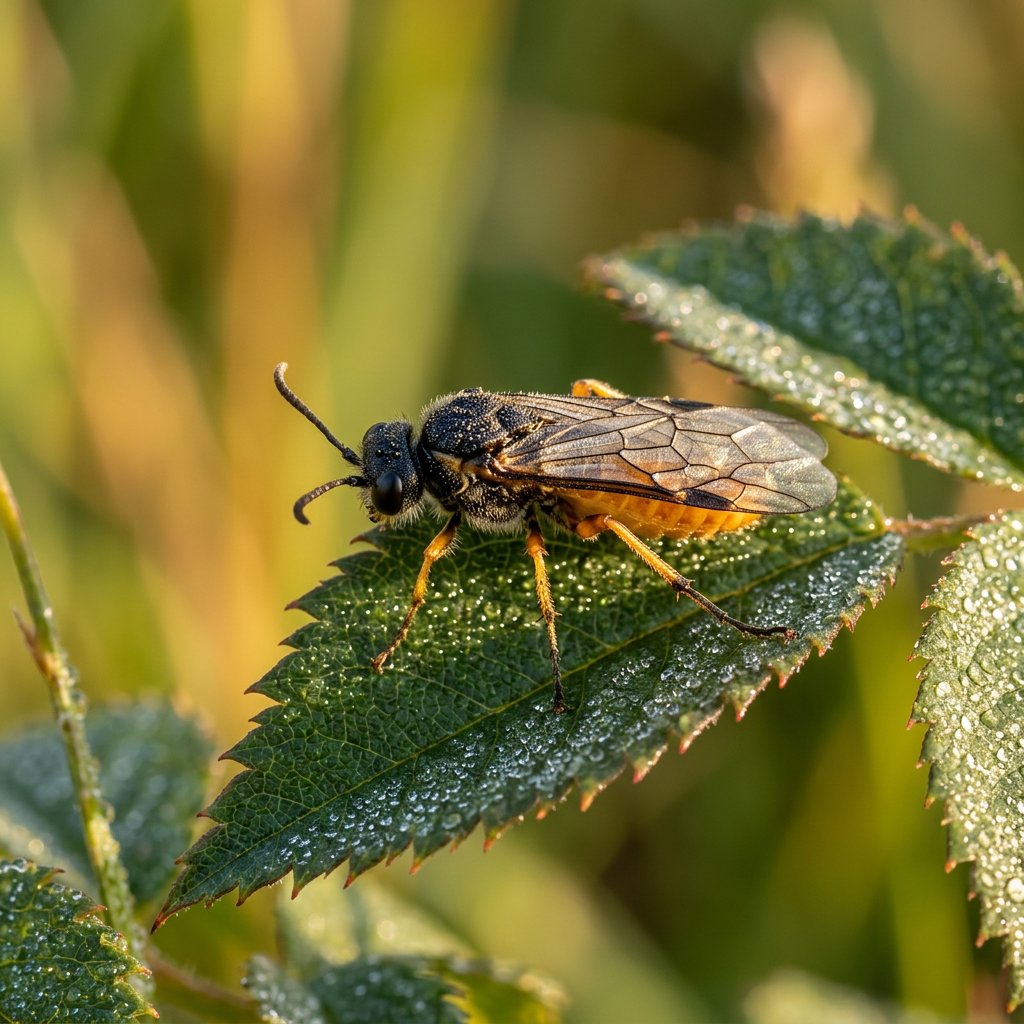
Often known as the Antler Sawfly, insects of the genus Cladius are fascinating little creatures frequently mistaken for tiny wasps. While they might look intimidating to some, they are actually "sawflies"—a group of insects named for the female's specialized egg-laying tool that looks and acts like a miniature saw. If you spot them in your garden, they are likely busy scouting out their favorite snack: your rose bushes or strawberry patches.
🔍 How to Identify
- 🌿 The Antennae: The most striking feature of the male is its "pectinate" or comb-like antennae. They look like tiny, feathery antlers, which is where their common name comes from.
- 🐜 The "No-Waist" Body: Unlike true wasps or ants, Cladius species lack a "wasp waist." Their thorax and abdomen are broadly joined, giving them a sturdy, cylindrical appearance.
- 🐛 The Bristly Larvae: Often called "rose slugs," the larvae are pale green and covered in tiny, stiff hairs. You will usually find them curled up on the underside of leaves.
🌲 Habitat & Ecology
- 🌹 Rose Garden Favorites: These insects are common in domestic gardens and meadows, specifically where roses, strawberries, or raspberries grow. They are a vital part of the food chain, serving as a protein-rich meal for nesting songbirds.
- 🍃 Lace-Makers: The larvae are "skeletonizers." Instead of eating the whole leaf, they munch on the soft tissue between the veins, leaving behind a delicate, brown, lace-like pattern on your plants.
⚠️ Safety & Toxicity
- 🛡️ Harmless to Humans: Despite the "fly" and "wasp" associations, Cladius insects cannot sting or bite humans. The "saw" on the female is used strictly for cutting into plant stems to deposit eggs.
- 🐶 Pet Safe: They are not toxic to cats, dogs, or children. The only "victims" of this insect are the leaves of the plants they inhabit.
✨ Fun Fact
- ✨ High-Tech Sniffers: The elaborate, branch-like antennae on the males aren't just for decoration; they provide a massive surface area for sensory receptors, allowing them to "smell" a female's pheromones from a significant distance through dense foliage.
More Details








