Info
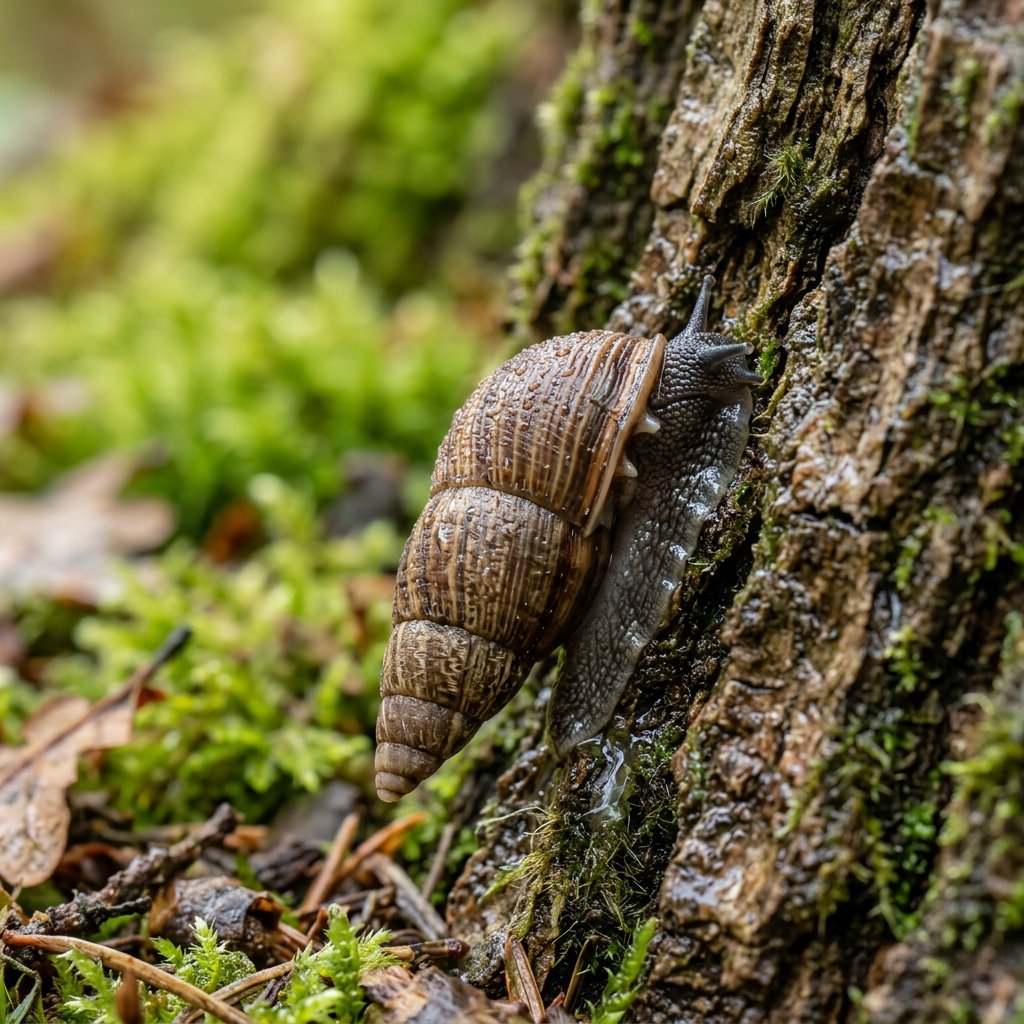
Known as the Two-toothed Door Snail, this tiny architect is a masterpiece of natural engineering. Often mistaken for a piece of debris or a small twig, it is one of the most common "left-handed" snails in Europe. Its name comes from the two distinct "teeth" or folds inside the opening of its shell, which act as a security gate against intruders.
🔍 How to Identify
- 🐚 The Spindle Shell: Unlike the round, coiled shells of common garden snails, this shell is slender, elongated, and tapers at both ends like a spindle.
- 👈 Sinistral Coiling: It is "left-handed," meaning the shell spirals to the left. If you hold the shell with the tip pointing up, the opening will be on the left side.
- 📏 Textured Ribs: The brownish shell isn't smooth; it features fine, regular ridges or "ribs" that run across its surface, giving it a matte appearance.
🌲 Habitat & Ecology
- 🧗 Vertical Climber: You won't usually find these in the middle of a lawn. They prefer vertical surfaces like ancient stone walls, mossy rocks, and the trunks of smooth-barked trees like Beech or Ash.
- 🍴 Algae Grazer: They play a vital role in the ecosystem by cleaning surfaces. They emerge at night or during damp weather to graze on microscopic algae, lichens, and decaying plant matter.
⚠️ Safety & Toxicity
- ✅ Status: Completely harmless to humans, pets, and garden plants. Unlike the large Spanish Slug, these snails rarely bother living garden crops.
- 🧼 Hygiene: While non-toxic, it is always a good practice to wash your hands after handling any wild gastropod, as they can naturally carry various environmental bacteria.
✨ Fun Fact
The "Door" in its name refers to the clausilium, a unique, spring-loaded internal "trapdoor" that the snail uses to seal itself inside. When a predator tries to enter, this calcified plate snaps shut like a security door!
More Details








