Info
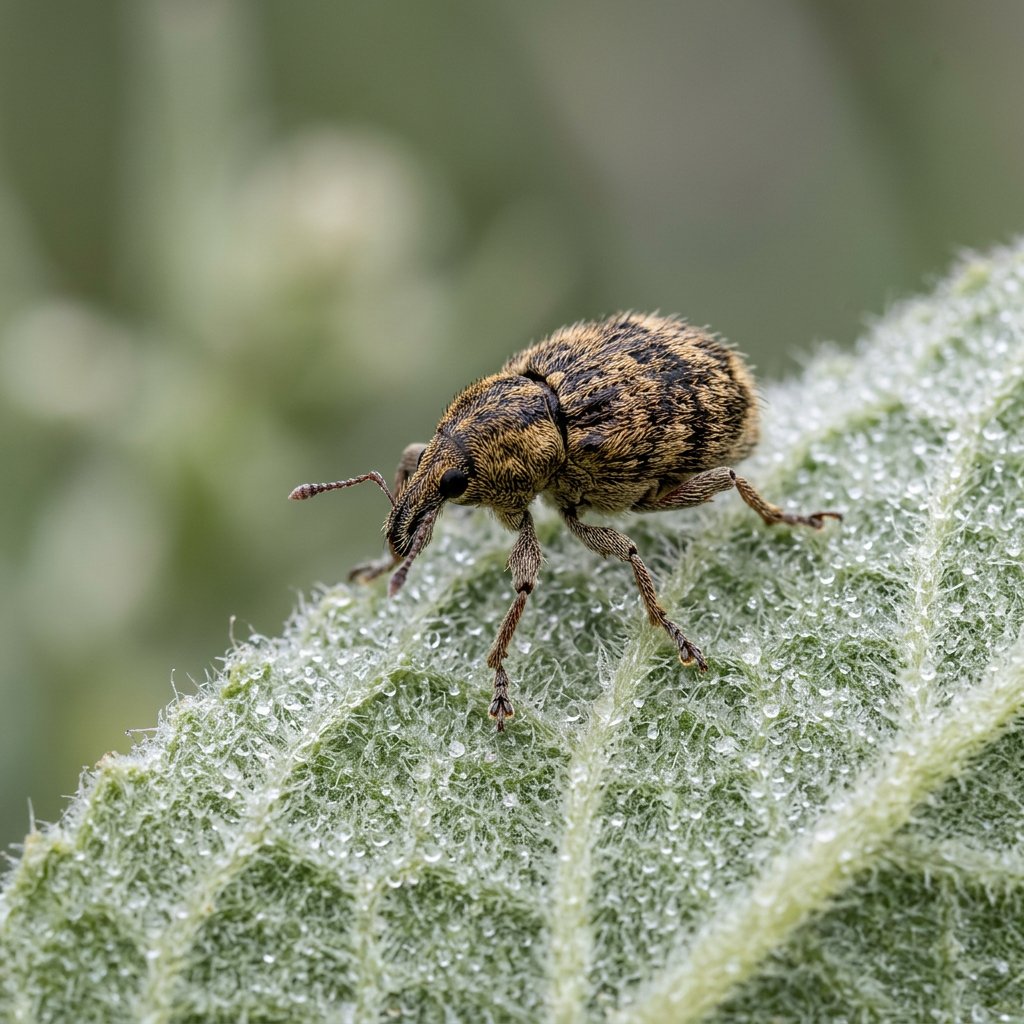
Meet the Cleopus weevil, a tiny, specialized architect of the garden that lives its entire life dedicated to a very specific group of plants. Often called the Figwort Weevil, these little beetles are masters of blending in, frequently mistaken for a small bit of dried mud or a speck of bird droppings until they start to crawl. While they are fascinating to watch, gardeners who prize their Butterfly Bushes might see them as a tiny, leaf-munching nuisance.
🔍 How to Identify
- 👃 The Weevil Snout: Like all true weevils, Cleopus features a distinct, downward-curved "rostrum" or snout, which it uses to drill into plant tissues.
- 🎨 Mottled Camouflage: Their rounded, sturdy bodies are usually decorated with a pattern of yellowish, tan, and dark brown spots, providing perfect cover against the stems of their host plants.
- 💧 Sluggish Larvae: The larvae are often easier to spot than the adults; they look like tiny, translucent, yellowish-green slugs coated in a glistening, sticky slime.
🌲 Habitat & Ecology
- 🍃 The Figwort Specialist: You will almost exclusively find these insects on Scrophularia (Figwort) or Buddleja (Butterfly Bush). They are "host-specific," meaning they won't wander off to eat your roses or vegetables.
- 🪟 Window-Pane Feeding: They have a unique way of eating; the larvae graze on the surface of leaves, leaving behind "window-panes"—thin, transparent patches where the top layer of the leaf has been scraped away but the bottom remains.
- 🍂 Winter Sleep: As the weather cools, the adults crawl down into the leaf litter or soil at the base of their favorite plant to hibernate until the following spring.
⚠️ Safety & Toxicity
- ✅ Gentle Neighbor: Cleopus weevils are completely harmless to humans and pets. They do not bite, sting, or carry any diseases.
- 🌿 Plant Health: While they are not "pests" in the traditional sense, a large population can make ornamental Figworts look a bit tattered. However, they rarely cause enough damage to actually kill a healthy plant.
- 🧤 Sticky Situation: If you handle the larvae, be prepared for a bit of sticky residue! Their slime is a defense mechanism but is non-toxic to human skin.
✨ Fun Fact
The sticky slime that covers the Cleopus larvae isn't just for show—it is a sophisticated "bio-shield." This goo is made from recycled plant chemicals that make the larvae taste terrible to ants and birds, effectively turning the insect into a "distasteful" gummy snack that predators avoid!
More Details








