Info
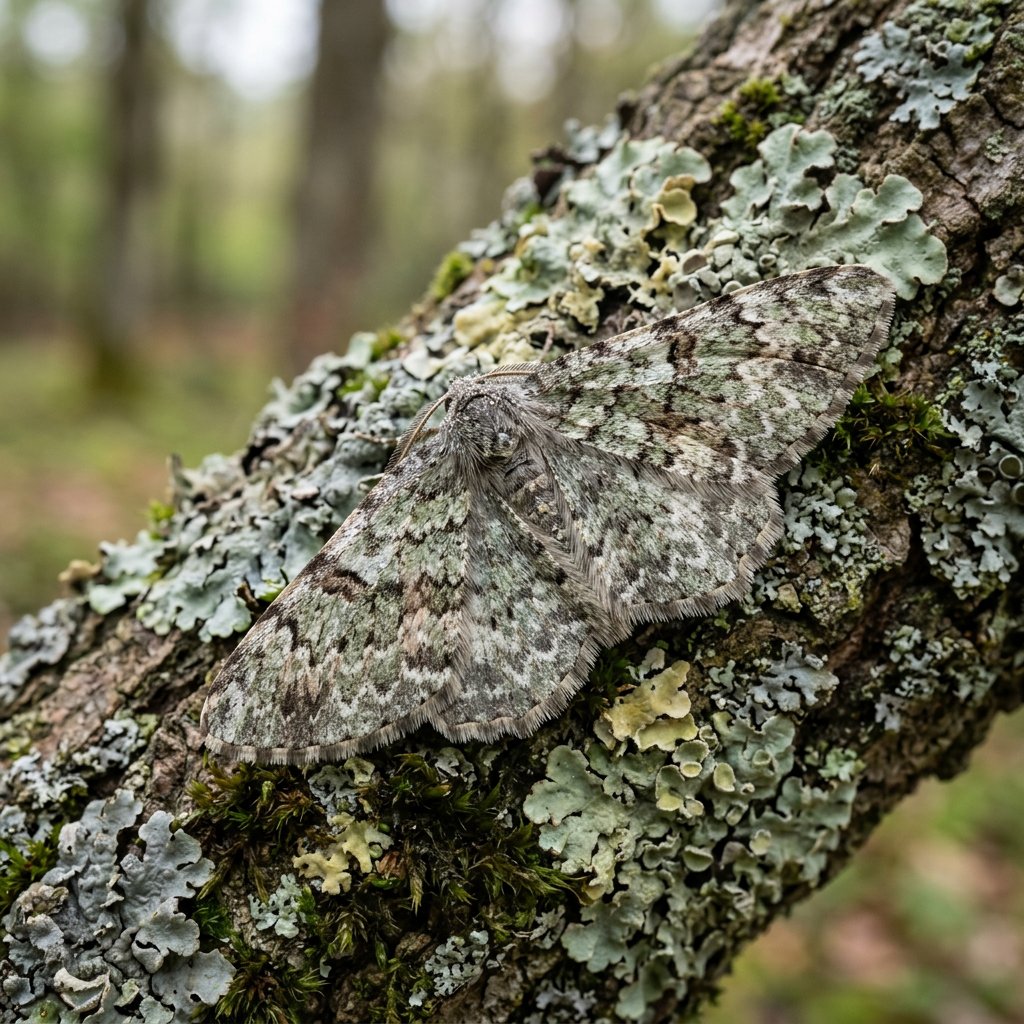
Known as the Brussels Lace, this moth is a living piece of Victorian embroidery. It is famous among entomologists for its incredible "cryptic coloration," which allows it to vanish completely against the bark of an old, lichen-covered tree. It is a gentle nocturnal visitor that serves as a tiny, winged indicator of a healthy, unpolluted environment.
🔍 How to Identify
- 🎨 Intricate Patterns: The wings feature a delicate, mottled mix of pale seafoam green, charcoal grey, and white, mimicking the exact texture of "crustose" lichen.
- 📐 Resting Posture: Like many in the Geometrid family, it rests with its wings held perfectly flat and wide against a surface, minimizing shadows to avoid detection by hungry birds.
- 🐛 The "Twig" Larva: The caterpillar is a master of disguise, possessing small humps and a greenish-grey body that makes it look exactly like a fragment of a lichen-encrusted twig.
🌲 Habitat & Ecology
- 🌳 The Lichen Connection: Unlike many moths that eat leaves, the Brussels Lace caterpillar feeds exclusively on various lichens growing on trees and stone walls. This makes them highly dependent on old-growth forests and mature gardens.
- 🌙 Nighttime Wanderer: The adults are active during the mid-summer months (July and August). While they are masters of camouflage by day, they are easily entranced by porch lights and glowing windows at night.
⚠️ Safety & Toxicity
- 🦋 Harmless Friend: The Brussels Lace is entirely non-toxic. It does not possess a stinger, nor does it have mandibles capable of biting humans or pets.
- 🐾 Safe for Gardens: Because they eat lichen rather than ornamental foliage or vegetables, they are "neutral" garden residents that won't damage your prized plants.
✨ Fun Fact
- 🧼 The Clean Air Indicator: Because lichen is extremely sensitive to air pollution (especially sulfur dioxide), the Brussels Lace moth is rarely found in heavily industrial areas. Seeing one in your garden is a glowing "certificate" that your local air quality is excellent!
More Details








