Info
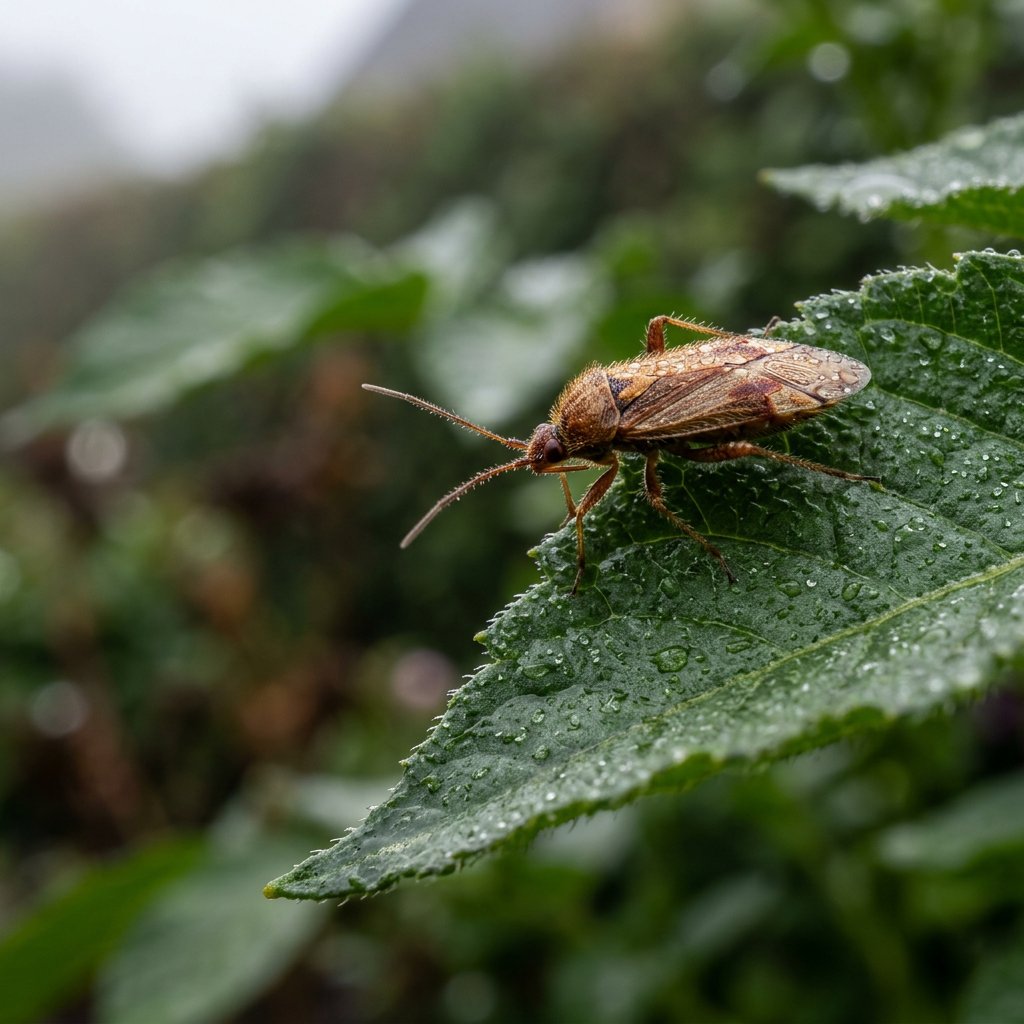
Meet the Closterotomus norvegicus, better known as the Potato Capsid Bug. While its vibrant lime-green color makes it look like a harmless leaf-dweller, gardeners often see it as a tiny, sap-sucking saboteur. Often found darting across daisies or potato leaves, this bug is a master of camouflage that prefers to hide in plain sight among summer greenery.
🔍 How to Identify
- 🟢 Body Shape: It has an elongated, oval body reaching about 6–8mm in length. While usually a bright, grassy green, some individuals turn a darker olive or reddish-brown as they age.
- ⚫ The "Double Spot": If you look closely at the pronotum (the shield-like area behind the head), you will usually see two distinct, small black spots. These are a key diagnostic feature for this species.
- 🕷️ Black Bristles: Unlike many other smooth-looking mirid bugs, its forewings are covered in tiny, fine black hairs or bristles, giving it a slightly "matte" appearance under a magnifying glass.
🌲 Habitat & Ecology
- 🍽️ A Generalist Eater: This bug isn't picky. While it is a notorious pest for potato and strawberry crops, it is equally happy feeding on nettles, clover, and various ornamental garden flowers like Chrysanthemums.
- 🥀 The "Tattered" Look: It uses needle-like mouthparts to pierce plant tissues. It doesn't just drink sap; it injects saliva that is toxic to plant cells. As the leaf grows, the dead spots fall out, leaving the foliage looking like it was hit by tiny buckshot or shredded by a miniature lawnmower.
- 🏃 Fast Reflexes: These insects are incredibly shy and agile. If you approach one, it will often "scuttle" to the underside of a leaf or drop to the ground to hide in the shadows.
⚠️ Safety & Toxicity
- ✅ Human Safety: This insect is entirely harmless to humans and pets. It does not possess a stinger, and its mouthparts are designed for plants, not skin.
- 🌿 Plant Risk: While "safe" for you, it is a foe for the garden. High populations can cause significant aesthetic damage to flowers and can stunt the growth of young vegetable shoots.
✨ Fun Fact
🧪 Chemical Sabotage: The damage caused by this bug is often mistaken for a viral disease. This is because their saliva is so chemically active that it continues to kill plant tissue long after the bug has finished its meal and moved on!
More Details








