Info
Known as the "spotless ladybug" of the West, the California Ladybeetle is the minimalist cousin of the famous spotted ladybug. While most people associate ladybugs with polka dots, this native western species prefers a sleek, solid red or orange coat. It is a tireless guardian of the garden, patrolling leaves to keep pest populations in check.
🔍 How to Identify
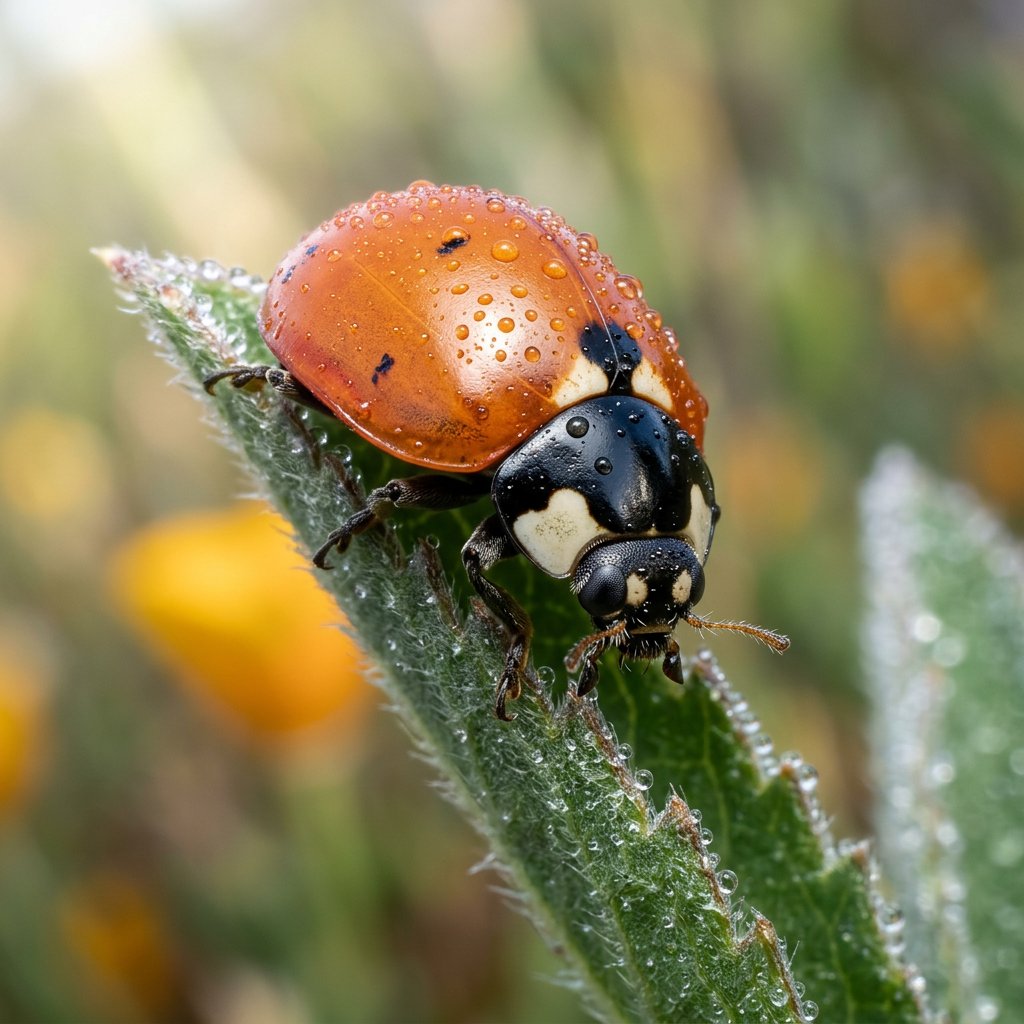
- 🐞 The Wing Covers (Elytra): Unlike the common 7-spot ladybug, this species typically has solid orange to deep red wing covers with no black spots at all.
- 🎨 The Head Shield (Pronotum): The black area behind the head features two distinct, pale white dashes or "eyebrows" that slant inward toward each other.
- 📏 Body Shape: It has a classic, highly domed, oval shape, measuring about 5 to 8 millimeters in length.
🌲 Behavior & Ecology
- 🍽️ Aphid Specialist: This beetle is a voracious predator. Both the larvae and the adults spend their days hunting soft-bodied insects like aphids, scale, and mites, making them a "biological pesticide" for farmers.
- 🏔️ Seasonal Migrator: In the West, these beetles are known to migrate. They often spend their summers in coastal areas or valleys and move to higher elevations or mountain canyons to huddle together and overwinter.
- 🌿 Garden Helper: They are highly active during the day and are often found on native shrubs, agricultural crops, and backyard roses where aphids tend to congregate.
⚠️ Safety & Toxicity
- ✅ Harmless Friend: The California Ladybeetle is entirely non-toxic to humans and does not possess a stinger.
- 👃 Reflex Bleeding: When handled roughly or threatened by a predator, they may excrete a tiny drop of foul-smelling yellow fluid from their leg joints. This is a harmless defense mechanism meant to tell birds they taste bad.
- 👄 The "Love Bite": Occasionally, a ladybug might give a tiny, harmless pinch with its mandibles if it’s looking for moisture or salt on your skin, but it cannot break the skin or transmit disease.
✨ Fun Fact
While they are almost always spotless, the California Ladybeetle is a bit of a "chameleon" species; depending on the temperature and region, some individuals may occasionally develop very faint, tiny black smudges, though they rarely ever form full spots!
More Details








