Info
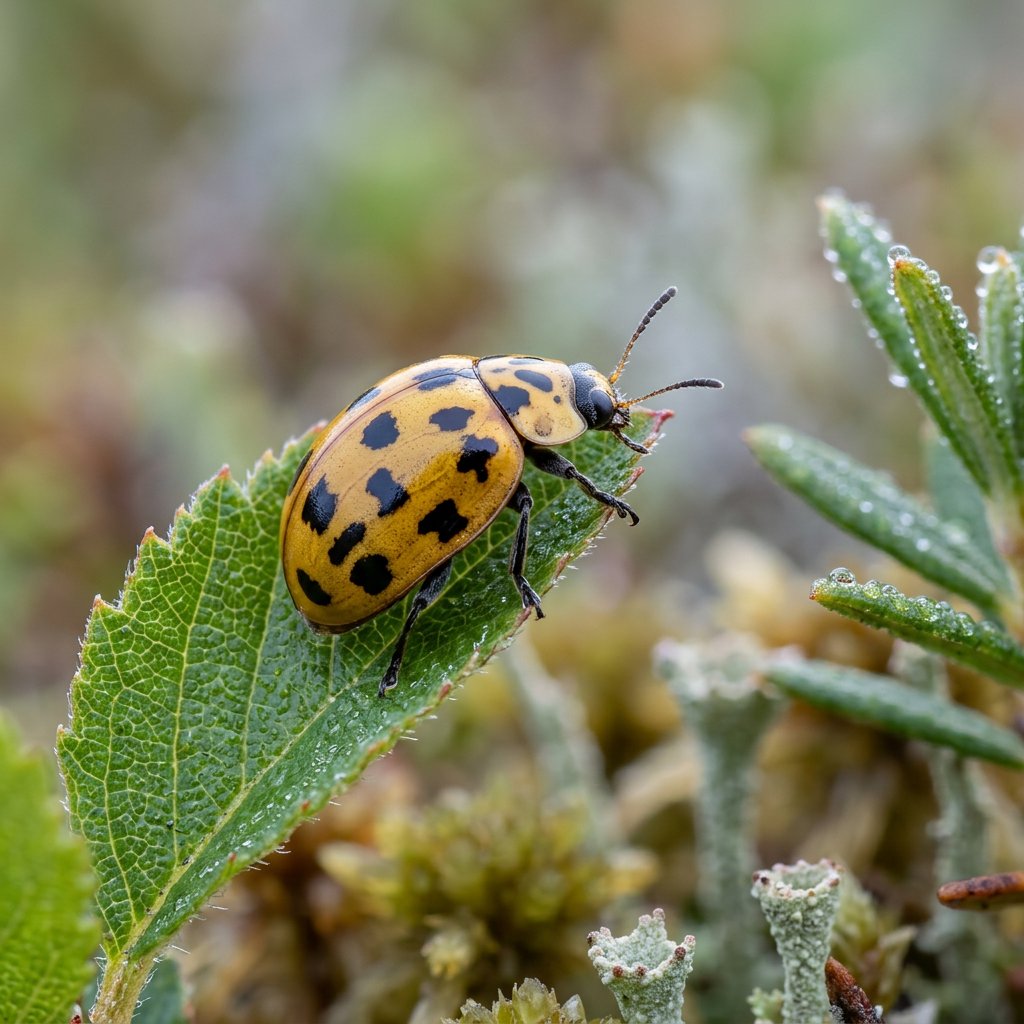
The Hieroglyphic Ladybird (Coccinella hieroglyphica) is like the ancient scribe of the beetle world. Known for the cryptic, ink-blot markings on its wing cases, this small predator is a "friend" to gardeners and nature lovers alike. It thrives in wilder, heath-filled landscapes where it plays a vital role in keeping local aphid populations under control.
🔍 How to Identify
- 🎨 Hieroglyphic Wings: The elytra (wing covers) are typically yellow, orange, or dull red, decorated with black spots that often fuse into strange, linear shapes resembling ancient script.
- 🎭 Color Variability: This species is a master of disguise; while most are orange and black, some individuals can be entirely black (melanic), making them look like a different species altogether.
- 🏷️ The Thorax Stamp: Look for a black pronotum (the shield behind the head) featuring two distinct, pale-cream spots at the front corners.
- 📏 Small Stature: It is slightly smaller than the common Seven-Spot Ladybird, usually measuring between 3.5mm and 5mm.
🌲 Habitat & Ecology
- 🌿 The Heathland Specialist: Unlike its urban cousins, this ladybird is often found in acidic environments like heathlands and moors. It is frequently spotted on heather, gorse, and occasionally on birch or pine trees.
- 🐜 Aphid Hunter: It is a voracious predator. Both the larvae and the adults spend their days hunting small, soft-bodied insects, making them excellent natural pest controllers for wild shrubs.
- ❄️ Winter Hider: During the cold months, they tuck themselves away in leaf litter or deep within the dense foliage of evergreen shrubs to hibernate.
⚠️ Safety & Toxicity
- 🛡️ Harmless Friend: The Hieroglyphic Ladybird is completely safe for humans. It does not possess a stinger and lacks the jaw strength to bite through human skin.
- 🧴 Reflex Bleeding: If it feels threatened by a predator (or a curious hand), it may excrete a tiny drop of yellow fluid from its leg joints. This is "hemolymph"—it smells slightly acrid and tastes bitter to birds, but it is harmless to people and pets.
- 🐾 Pet Safety: While non-toxic, the bitter defensive fluid is usually enough to discourage a dog or cat from trying to eat one.
✨ Fun Fact
📜 The Scribe’s Name: Its scientific name, hieroglyphica, was chosen because the black markings on its back are so irregular and complex that early entomologists thought they looked like a secret language or ancient Egyptian writing!
More Details








