Info
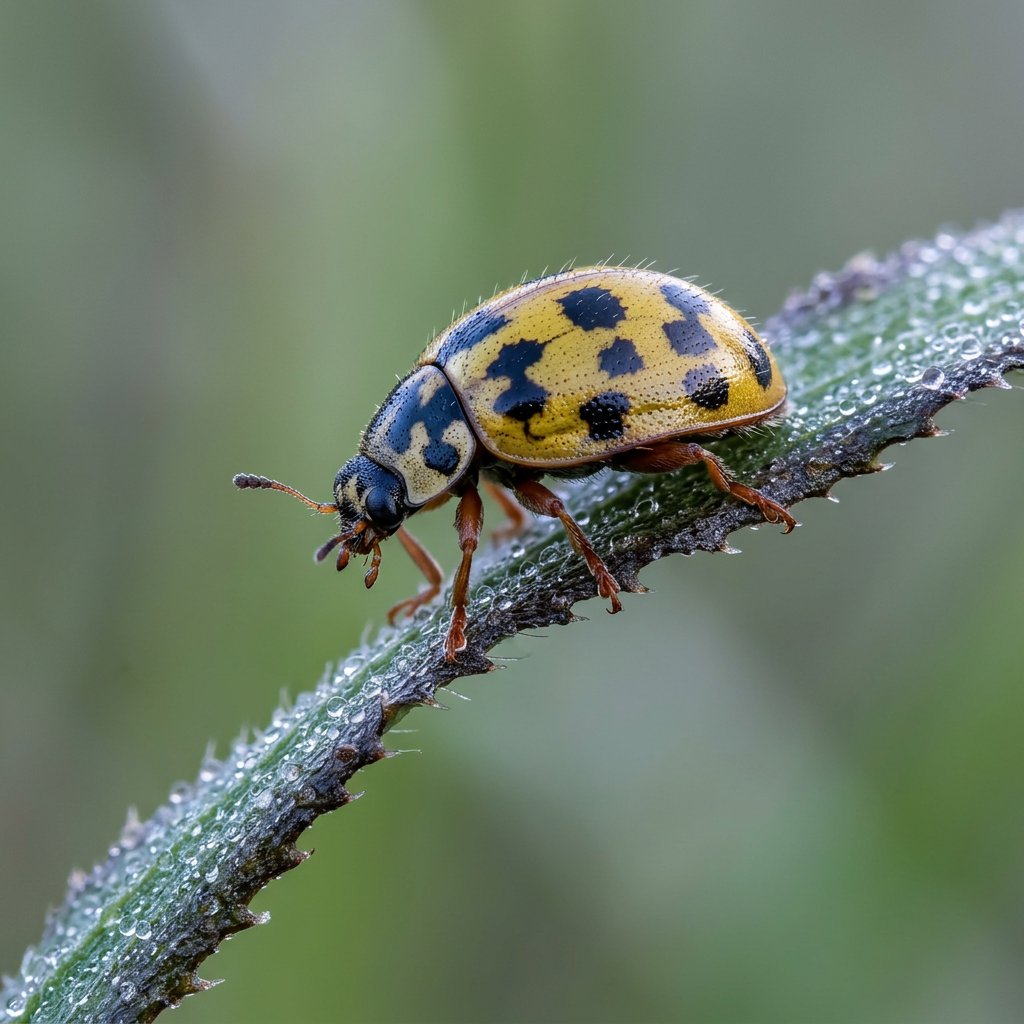
Often mistaken for a tiny, walking checkerboard, the 14-Spotted Ladybird is a vibrant and welcome guest in any garden. While most people picture ladybugs as red with black dots, this stylish beetle breaks the mold with its striking yellow-and-black geometric patterns. It is a tireless guardian of plants, spending its days patrolling leaves for pesky intruders.
🔍 How to Identify
- 🟨 The Pattern: It features exactly 14 black spots on a creamy yellow to bright orange background. These spots are often rectangular and frequently merge, creating a "checkered" appearance.
- 📐 Body Shape: This beetle is notably small (only 3–4mm) and has a slightly more oval, flattened shape compared to the rounder 7-spotted ladybird.
- 🛡️ The Pronotum: The shield-like section behind the head is yellow and usually marked with four to eight black spots that sometimes fuse into a crown-like shape.
🌲 Habitat & Ecology
- 🐞 A Gardener’s Ally: This insect is a dedicated predator. Both the adults and their alligator-like larvae have a massive appetite for aphids, scale insects, and whiteflies, making them a natural "pesticide" for your flowers.
- 🌿 Diverse Environments: You are most likely to find them in low-growing vegetation, meadows, and deciduous forests. They particularly love hanging out on the leaves of maple, lime, and oak trees where their prey is abundant.
- ☀️ Sun Seekers: They are most active during the peak of summer, basking on the upper sides of leaves to soak up the warmth needed for their high-speed hunting missions.
⚠️ Safety & Toxicity
- ✅ Status: Completely harmless and non-aggressive. They do not bite or sting humans or pets.
- 🟡 Reflex Bleeding: If handled roughly, they may release a tiny drop of bitter, yellow fluid from their leg joints. This is a harmless defense mechanism meant to tell birds they taste terrible, but it might leave a faint yellow stain on your skin.
✨ Fun Fact
Unlike many other ladybird species that hibernate in huge clusters inside houses, the 14-Spotted Ladybird prefers a quiet winter, usually tucking itself individually into leaf litter or thick grass tussocks to wait for spring.
More Details








