Info
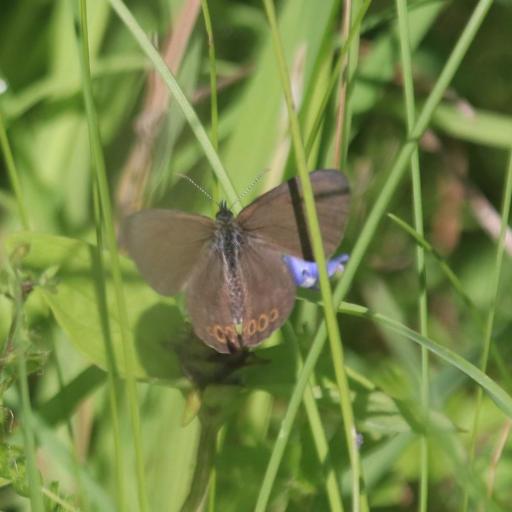
Known to enthusiasts as the Scarce Heath, this delicate butterfly is a hidden gem of the damp meadows and woodland fringes of Europe and Northern Asia. It is a quiet, low-flying resident that prefers the shadows of the forest edge over the open sun, often appearing like a dancing dark leaf until it settles to reveal its intricate "eyespots."
🔍 How to Identify
- 👁️ The Eyespot Gallery: The underside of the hindwings features a striking row of black "ocelli" (eyespots), each with a white center and a bright yellow-orange ring, used to confuse predators.
- 🦋 Dusky Upperwings: When seen from above, the wings are a uniform, dark smoky brown, which helps the butterfly remain nearly invisible when resting among shadows.
- 🎗️ Silver Thread: A thin, shimmering white or silvery line often runs along the inner side of the eyespots, adding a touch of elegance to its "understated" look.
🌲 Habitat & Ecology
- 💧 Moisture Lovers: You won't find these in dry urban gardens; they strictly inhabit damp, marshy clearings and peat bogs where the air remains humid and the soil is moist.
- 🌾 Grassy Nurseries: The larvae (caterpillars) are specialists that feed on various grasses and sedges, such as Carex and Poa, making them highly dependent on the preservation of natural wetlands.
- 🛡️ Environmental Sentinel: Because they are so sensitive to drainage and land development, the presence of the Scarce Heath is a sign of a high-quality, undisturbed ecosystem.
⚠️ Safety & Toxicity
- 🟢 Friend of the Meadow: The Scarce Heath is entirely harmless to humans, pets, and garden crops. It does not bite, sting, or carry any known diseases.
- 🤲 Handle with Care: These butterflies are physically fragile and often protected by law in many countries due to their declining numbers. Observing them without touching is the best way to ensure their survival.
✨ Fun Fact
The "eyes" on the wings of the Scarce Heath are a clever survival hack; if a bird decides to attack, it will usually aim for the "eye" at the edge of the wing rather than the butterfly’s actual head, allowing the insect to escape with just a small tear in its wing!
More Details








