Info
Often found dancing over tall, damp grasses, the Chestnut Heath (Coenonympha iphis) is a subtle jewel of the meadow. While its cousin, the Small Heath, is more widespread, the Iphis is a sign of a healthy, undisturbed grassy ecosystem. It carries an air of quiet elegance, blending perfectly into the golden hues of late summer fields.
🔍 How to Identify
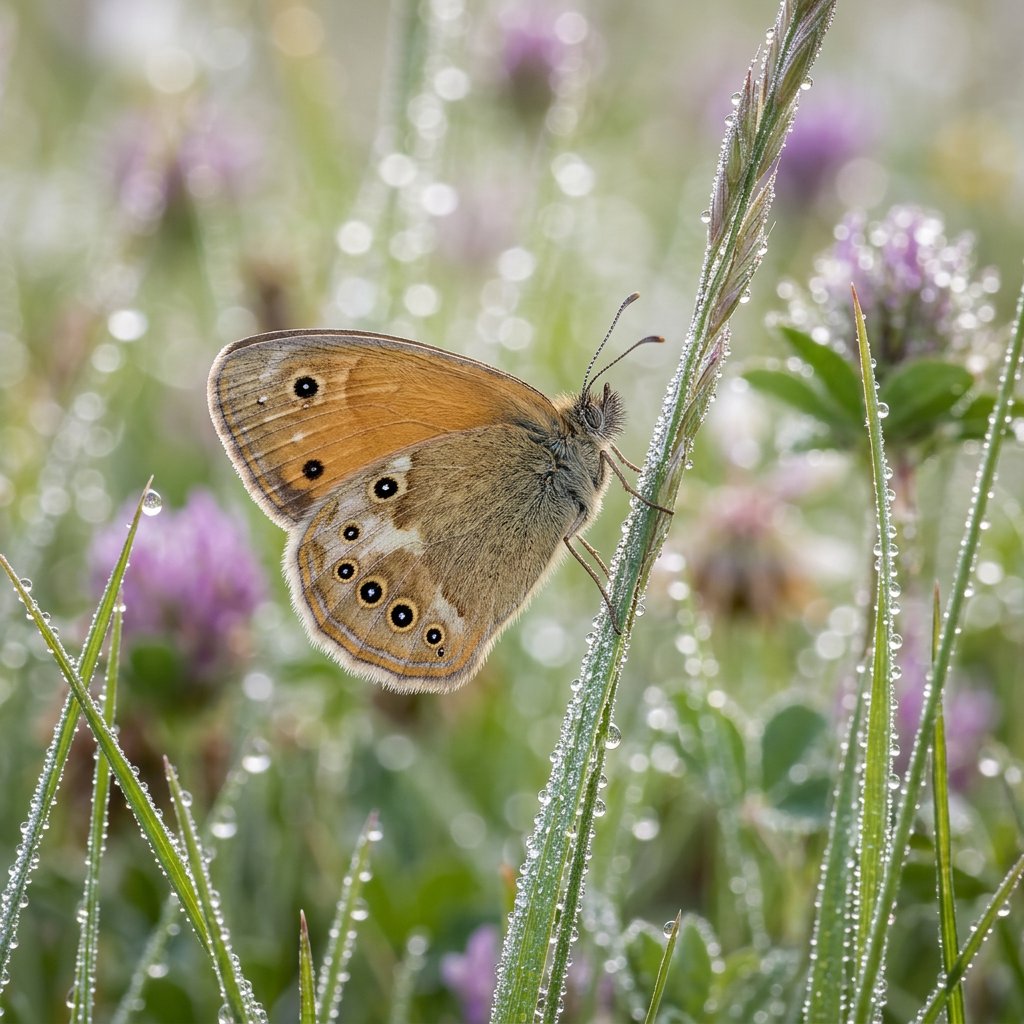
- 🦋 The Underside "Eyes": The most reliable feature is a row of small, black eyespots with white centers (ocelli) on the underside of the hindwings, set against a grayish-brown background.
- 🍂 Chestnut Upperwings: When it opens its wings, you'll see a warm, uniform chestnut or tawny brown color, usually lacking the prominent spots found on the underside.
- ⚪ The White Band: Look for an irregular, creamy-white streak or band that runs near the eyespots on the underside of the hindwing, which helps distinguish it from similar "Brown" species.
🌲 Habitat & Ecology
- 🌾 A Grassland Specialist: This butterfly is a "friend" of the meadow; its caterpillars feed exclusively on various grasses, such as Meadow-grass (Poa) and Fescue (Festuca).
- 💧 Moisture Seeker: Unlike some of its hardier relatives, the Chestnut Heath prefers damp environments, often congregating in moist meadows, woodland clearings, and near the edges of marshlands.
- ☁️ Low-Level Flier: You won't see this insect soaring high in the trees. It has a weak, bobbing flight pattern, usually staying just inches above the grass tops to avoid wind and predators.
⚠️ Safety & Toxicity
- ✅ Harmless: The Chestnut Heath is completely safe for humans, pets, and gardeners. It does not bite, sting, or carry any known toxins.
- 🤲 Fragile Wings: Like all butterflies, their wings are covered in microscopic scales. If you find one trapped indoors, gently move it using a container rather than your fingers to avoid damaging its ability to fly.
✨ Fun Fact
The "eyes" on the underside of its wings aren't just for show; they are a clever survival tactic. They draw a predator's strike toward the edge of the wings and away from the butterfly's vital body, allowing it to escape with only a small chip in its wing.
More Details








