Info
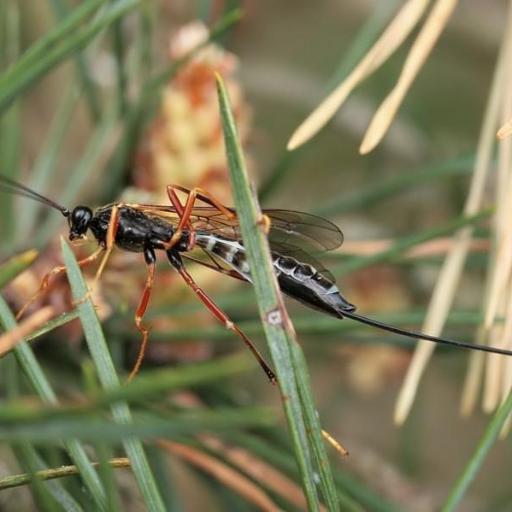
Meet the Coleocentrus excitator, one of nature’s most impressive (and often misunderstood) forest guardians. While its long, spear-like tail might look like a weapon from a sci-fi movie, this insect is actually a specialized parasitoid wasp that plays a vital role in keeping forest ecosystems healthy. Often called the "Large Ichneumon," it is a master of detecting hidden life deep within solid wood.
🔍 How to Identify
- 🪡 The Ovipositor: Its most striking feature is the incredibly long, needle-like "tail" on females, which is used for laying eggs, not stinging.
- 🦟 Slender Silhouette: It possesses a typical "wasp waist" with a long, elegant abdomen and delicate, translucent wings.
- 🎨 Color Pattern: Usually dark-bodied (black or deep brown) with contrasting pale or yellowish legs, allowing it to blend into the shadows of the forest floor.
🌲 Habitat & Ecology
- 🪵 The Wood-Driller: This wasp is a specialist. It spends its time patrolling old-growth forests and decaying logs, searching for the larvae of wood-boring insects like Horntail wasps or beetles.
- 📡 Vibrational Hunter: It uses its sensitive antennae to "hear" or feel the vibrations of larvae moving deep inside a tree trunk. Once it finds a target, it performs the incredible feat of drilling its flexible ovipositor directly through the wood to reach its host.
- 🌲 Ecosystem Balance: By targeting wood-boring pests, Coleocentrus excitator acts as a natural population control, preventing "pest" species from destroying too many trees at once.
⚠️ Safety & Toxicity
- ✅ Harmless to Humans: Despite its intimidating appearance, this wasp is a "gentle giant." It has no venomous stinger and is not aggressive toward humans or pets.
- 🚫 Hands-Off Policy: While it won't sting you, it is delicate. Picking one up may stress the insect or lead to accidental injury to its complex egg-laying equipment. It is best enjoyed from a distance as it performs its "drilling" dance.
✨ Fun Fact
The "drill" on this wasp is actually tougher than it looks; it is reinforced with ionized manganese or zinc, allowing the insect to bore through solid wood without snapping its delicate tail!
More Details








