Info
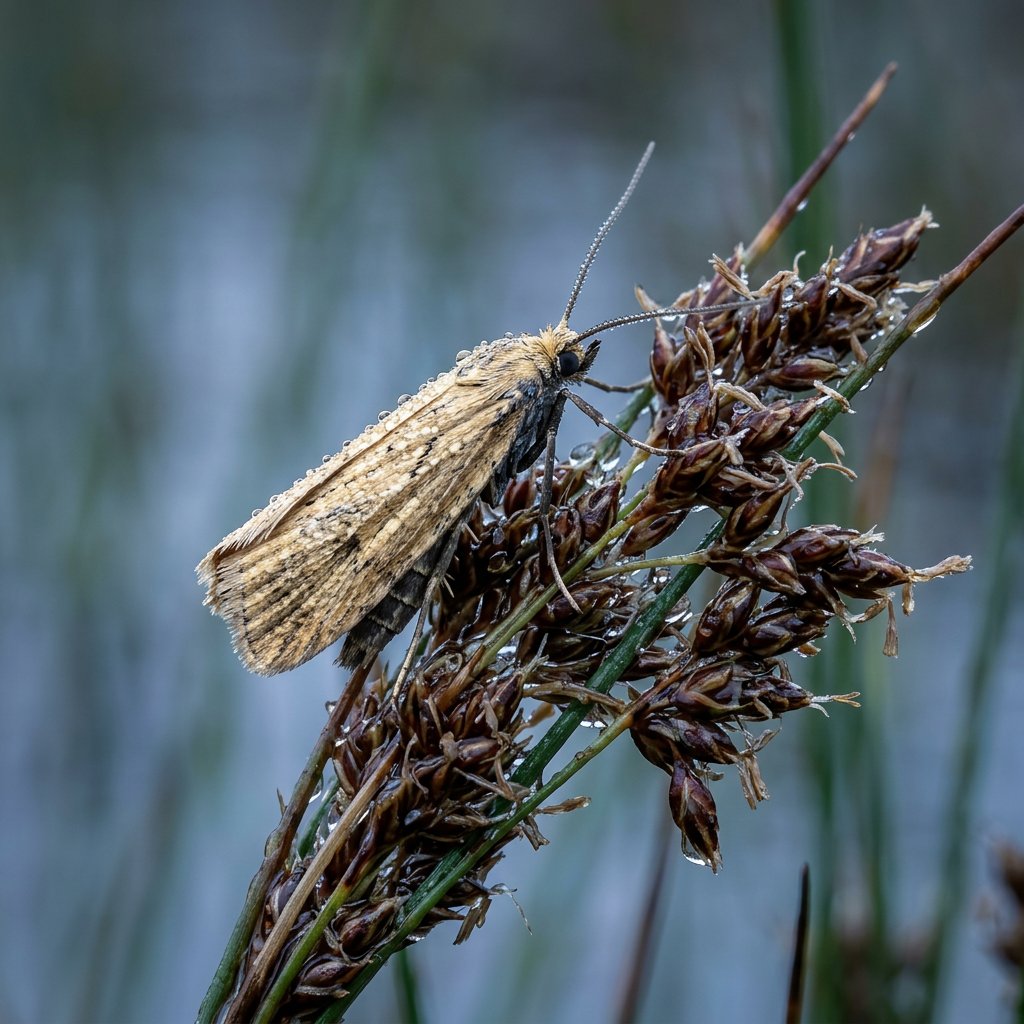
Often called the Juncus Case-moth, this tiny architect is more famous for its "mobile home" than its appearance as an adult. It is a specialist of damp environments, spending most of its life disguised as a stray bit of plant debris. While it may go unnoticed by the casual observer, it is a fascinating example of how insects use their environment for camouflage and survival.
🔍 How to Identify
- 🎒 The Portable Case: The most distinct feature is the larval case—a small, silk-lined tube covered in fragments of rush seeds. It looks like a tiny, elongated seed pod attached to a plant.
- 🦋 The Adult Wings: As a moth, it is small and delicate with narrow, ochre or straw-colored wings that feature a distinctive "fringed" or hairy trailing edge.
- 📏 Miniature Scale: These are "micro-moths," with a wingspan often less than 12mm. You are more likely to spot the cases on rush heads than the flying adults.
🌲 Habitat & Ecology
- 🌾 The Rush Specialist: This insect is almost exclusively found where rushes (genus Juncus) grow. If you have a damp corner in your garden or a nearby pond, you may find them clinging to the seed heads.
- 🍽️ Seed Eater: The larvae are specialized feeders. They hollow out the seeds of the rush plant to feed, eventually using the empty seed husks to expand their protective silk cases.
- 🏠 Mobile Living: Unlike many caterpillars that stay on a leaf, the Coleophora alticolella larva carries its house everywhere. It pokes its head out to feed and retreats inside at the first sign of a predator.
⚠️ Safety & Toxicity
- 🛡️ Completely Harmless: This moth is a "friend" to the ecosystem. It does not bite, sting, or carry any diseases.
- 🐶 Pet & Child Safe: They are non-toxic and pose no threat to curious pets or children. They are not considered garden pests, as they only target specific wild rushes rather than ornamental flowers or vegetables.
✨ Fun Fact
The Juncus Case-moth is a master of "upcycling." As the larva grows, it doesn't just build a new home; it structurally reinforces its silk case by weaving in the very seeds it has just finished eating!
More Details








