Info
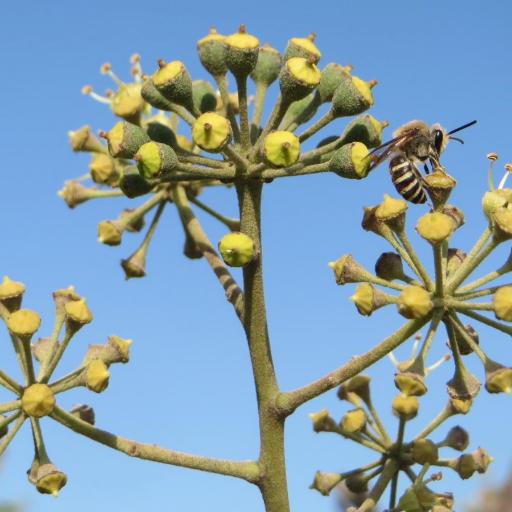
The Ivy Bee (Colletes hederae) is the late-season superstar of the pollinator world. While most bees are tucking themselves away for the winter, this industrious insect is just getting started, timing its entire life cycle to the blooming of common ivy. First officially "discovered" and described by scientists as recently as 1993, they have since become a common and welcome sight in gardens across Europe and the UK during the autumn months.
🔍 How to Identify
- 🐝 Vibrant Banding: They possess very distinct, crisp bands of orange-yellow and black on their abdomen. These stripes often look much brighter and more "clean" than those on a standard honeybee.
- 🧸 Ginger Fuzz: The thorax (the middle section) is covered in a dense, velvety layer of ginger or tawny-colored hair, giving them a cuddly, bumblebee-like appearance from above.
- 📏 Size & Shape: Roughly 10–13mm long. They are slightly larger than common plasterer bees and have a more tapered, pointed rear end than a honeybee.
🌲 Habitat & Ecology
- 🌿 The Ivy Specialist: These bees are "oligolectic," meaning they are specialized feeders. While they may sip nectar from other late flowers, they rely almost exclusively on the pollen of Hedera helix (Common Ivy) to provide for their young.
- 🏘️ Bee "Cities": Although they are solitary bees (meaning every female builds her own nest), they are highly gregarious. You might find hundreds of tiny holes in a single south-facing sandy bank or garden lawn, creating a bustling "neighborhood" of individual tunnels.
- 🍂 Late Bloomers: Their timing is their most defining trait. If you see a swarm of friendly, honeybee-like insects hovering over an ivy-covered wall in September or October, you are almost certainly looking at Ivy Bees.
⚠️ Safety & Toxicity
- 😇 Gentle Giants: Ivy Bees are incredibly docile and pose virtually no threat to humans or pets. Because they don't have a hive or a queen to defend, they have no "aggressive" instinct.
- 🩹 Low Sting Risk: Only the females possess a stinger, and they will only use it if they are physically squeezed or stepped on. The sting is reported to be very mild compared to a wasp or honeybee, though those with known bee allergies should still exercise standard caution.
✨ Fun Fact
The Ivy Bee was hiding in plain sight for centuries! Because it looks so similar to other Colletes species, it wasn't recognized as a unique, separate species by entomologists until 1993, making it one of the most significant "new" insect finds in recent European history.
More Details








