Info
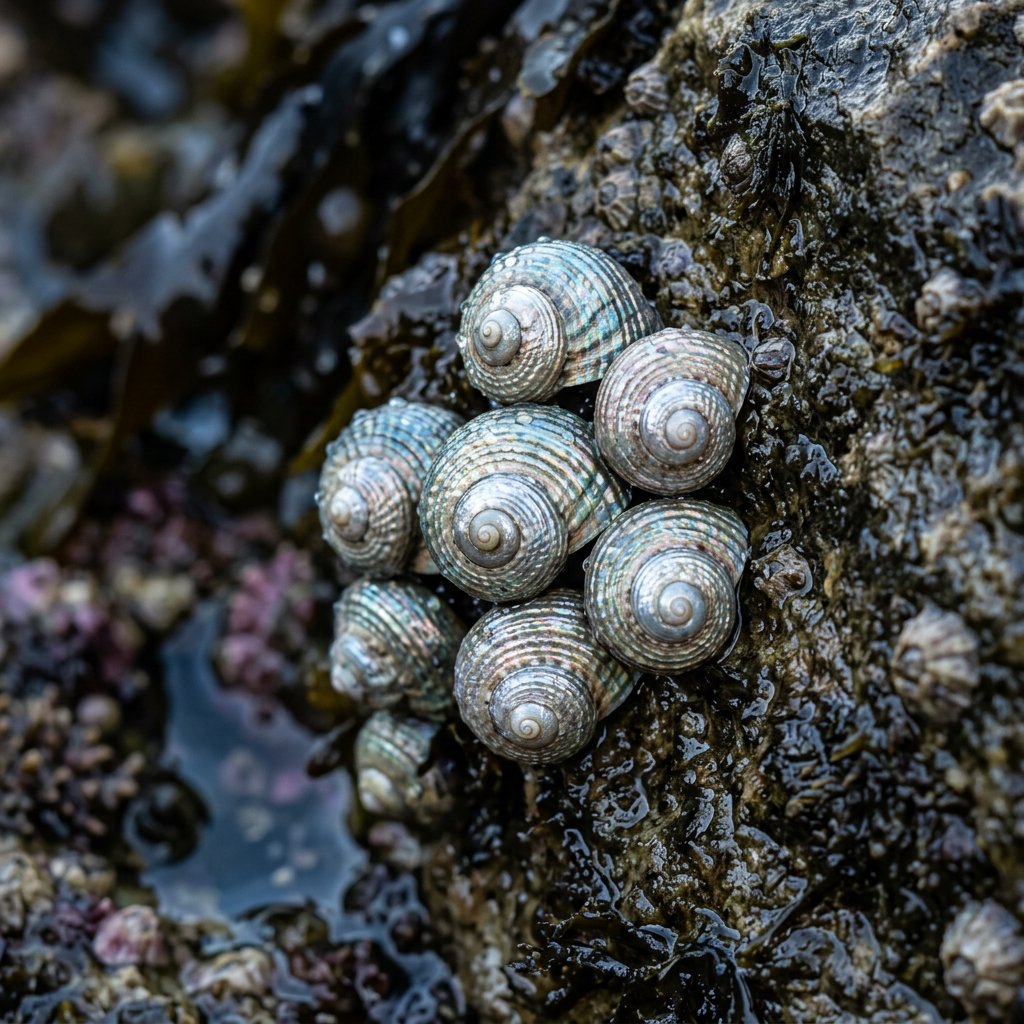
Often overlooked due to their microscopic size, members of the Colloniidae family are the "jewels of the tidepool." While their name might sound like a garden bug, these are actually small marine snails (gastropods) known for their beautifully sculpted, porcelain-like shells. They are the tiny engineers of the rocky shoreline, quietly grazing on algae while hiding in the smallest crevices of the reef.
🔍 How to Identify
- 🐚 Turbinate Shell: Their shells are shaped like a sturdy, coiled spinning top with a rounded base and a very small opening.
- 🚪 The Stony Door: They possess a thick, "calcified" operculum. Unlike many snails that have thin, papery doors, Colloniidae have heavy, bone-like trapdoors that seal their shells shut perfectly against predators.
- 🎨 Intricate Patterns: Though tiny—often only a few millimeters wide—their shells feature vibrant reds, pinks, or creamy whites with complex ridges or "beaded" textures that mimic the coral rubble they live in.
🌲 Habitat & Ecology
- 🌊 Reef Dwellers: These snails are strictly marine. You will find them tucked under rocks or nestled within coral reefs in tropical and subtropical waters around the world.
- 🌿 Algae Grazers: They are peaceful members of the underwater community. Using a specialized sandpaper-like tongue called a radula, they "mop" up microscopic algae and organic debris, helping to keep the reef surfaces clean.
⚠️ Safety & Toxicity
- ✅ Harmless: These snails are completely non-toxic and do not bite, sting, or carry venom. They are a "friend" to the ecosystem.
- 🐚 Fragile Shells: Because of their miniature size, they are incredibly delicate. If you find a shell on the beach, handle it with care, as the intricate spiraling can easily be crushed between your fingers.
✨ Fun Fact
The "trapdoor" (operculum) of some species in this family is so perfectly circular and sturdy that they have historically been used in miniature jewelry, sometimes referred to as "shiva shells" or "cat’s eyes" when found in larger related families!
More Details








