Info
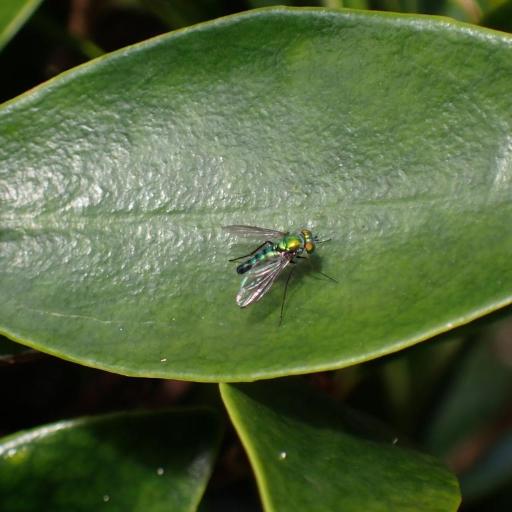
Known as the "Long-legged Fly," Condylostylus longicornis is often mistaken for a common housefly at a distance, but up close, it looks like a shimmering piece of living jewelry. These tiny aeronauts are the unsung heroes of the garden, acting as miniature fighter jets that patrol your plants for pests. If you see them darting across a sunlit leaf, consider yourself lucky—they are one of the best "friend" insects a gardener can have.
🔍 How to Identify
- 💎 The Body: Features a brilliant, metallic iridescence that shifts between emerald green, gold, and turquoise depending on how the light hits it.
- 🦵 The Legs: Characteristically long, slender, and stilt-like. They give the fly a delicate, "leggy" appearance compared to the stout legs of a typical fly.
- 👀 The Eyes: Large, prominent compound eyes that often have a reddish or bronze tint, covering a significant portion of the head.
- 🪽 The Wings: Mostly transparent with a distinct, intricate vein pattern; unlike some other flies, they hold their wings swept back in a "V" shape when resting.
🌲 Habitat & Ecology
- 🍽️ The Garden Guardian: These flies are voracious predators. They spend their days hunting soft-bodied insects like aphids, thrips, and mites. They are essentially a natural, chemical-free pest control service.
- 💃 The Sideways Dance: You will often find them on large, flat leaves in sunny spots. They exhibit a unique "skittering" behavior, moving rapidly in zig-zags or sideways bursts to scan for prey or mates.
- 💧 Moisture Lovers: They prefer humid environments near gardens, meadows, or woodlands where their prey is abundant.
⚠️ Safety & Toxicity
- ✅ Status: Completely harmless to humans and pets.
- 🚫 No Sting or Bite: Despite their predatory nature toward other insects, they lack the mouthparts to bite humans and do not possess a stinger. They are safe to observe closely and do not carry the same diseases associated with common filth flies.
✨ Fun Fact
- 🕺 Wing-Flicking Communication: Male Condylostylus flies are known to perform elaborate "dances" by waving their legs and flicking their wings to signal to females. It is one of the most complex courtship displays in the world of flies!
More Details








