Info
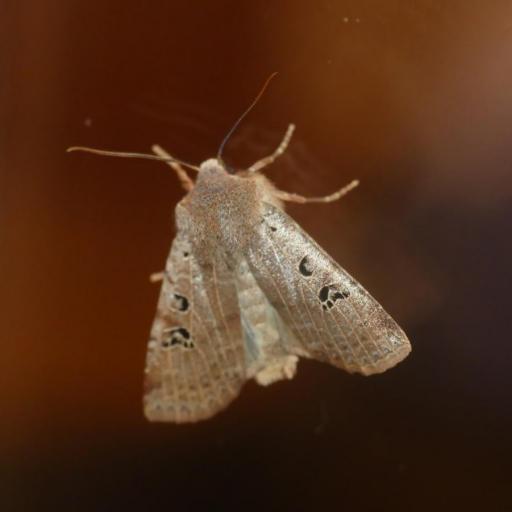
The Black-dotted Chestnut (Conistra rubiginosa) is a master of camouflage that thrives when most other insects have tucked themselves away for the season. Often called a "winter moth," this hardy flier is a common sight for those who explore their gardens on mild winter evenings or early spring nights. With its earthy tones and speckles, it perfectly mimics the fallen leaves of the forest floor.
🔍 How to Identify
- 🎨 Wings: The forewings are a warm, sandy-buff to reddish-brown color, decorated with distinct, small black spots (stigmata) that give the moth its name.
- 🍂 Camouflage: When at rest, it holds its wings flat and overlapping, creating a silhouette that looks exactly like a dried, withered leaf.
- 🧥 Furry Thorax: Like many members of the Noctuidae family, it has a noticeably "furry" or hairy thorax, which helps it retain heat during cold nights.
🌲 Habitat & Ecology
- 🌙 Winter Activity: Unlike most moths that spend winter as pupae, the Black-dotted Chestnut overwinters as an adult. It emerges on damp, mild nights in January and February to feed and find a mate.
- 🍯 Dietary Habits: Adults are frequent visitors to late-season ivy blossoms and early-season sallow catkins. In the garden, they are often drawn to "sugar patches" or fermenting fruit left on the ground.
- 🍃 Caterpillar Host: The larvae are not picky eaters; they feed on various broad-leaved trees and shrubs, including Apple, Lilac, and Plum, before transitioning to low-growing herbaceous plants as they mature.
⚠️ Safety & Toxicity
- 🛡️ Harmless: The Black-dotted Chestnut is entirely safe for humans and pets. It does not bite, sting, or possess any known toxins.
- 🐾 Pet Interaction: If your cat or dog catches one, there is no need for concern, though the dusty scales on the wings (common to all moths) might cause a tiny sneeze.
✨ Fun Fact
This moth is a true "winter warrior." While most insects require high temperatures to fly, the Conistra genus has evolved a specialized "shivering" behavior to warm up their flight muscles, allowing them to take to the skies even when temperatures are just a few degrees above freezing!
More Details








