Info
Known affectionately as the "Moon-horned Beetle," Copris lunaris is a miniature titan of the pasture. While many beetles go unnoticed, this glossy black architect is famous for its impressive horn and its tireless work ethic in recycling nutrients back into the earth. In various cultures, dung beetles have been celebrated as symbols of transformation and the eternal cycles of nature.
🔍 How to Identify
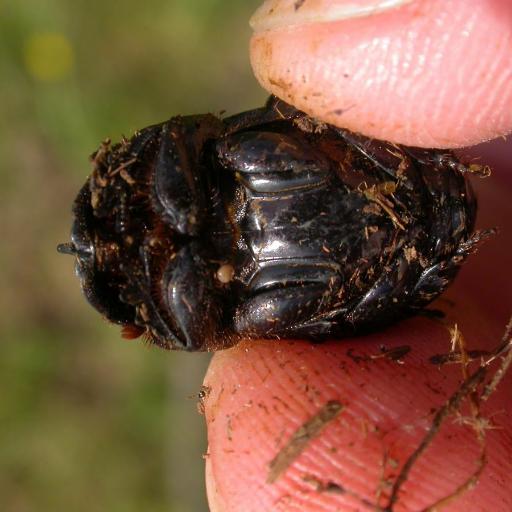
- 🦏 The Lunar Horn: Males sport a long, slightly curved horn on their head, reminiscent of a rhinoceros or a crescent moon. Females are less "showy," possessing a much shorter, modest tubercle.
- 🖤 Obsidian Armor: The body is deep, jet black, and highly polished, often reflecting light with a metallic sheen.
- 📏 Robust Shape: They have a very rounded, convex body with distinct, deep vertical grooves (striae) running down their wing covers (elytra).
- 💪 Powerful Legs: Their front legs are wide and serrated, perfectly evolved for digging through tough soil and heavy clay.
🌲 Habitat & Ecology
- 🚜 The Tunneler Strategy: Unlike the famous "rollers" of Africa, the Lunar Dung Beetle is a "tunneler." They dig deep, elaborate chambers directly beneath or next to animal waste to store food for their young.
- 🌱 Nature’s Fertilizer: By dragging manure deep underground, they provide a massive service to the ecosystem. They aerate the soil and deliver concentrated nutrients directly to the root zones of plants and grasses.
- 🐎 Dietary Preference: They are most commonly found in old-growth pastures and meadows, specifically seeking out the waste of cattle and horses.
⚠️ Safety & Toxicity
- 🛡️ Gentle Giant: Despite the intimidating horn on the males, these beetles are completely harmless to humans. They possess no stinger and are not prone to biting.
- 🧼 General Hygiene: Since their primary habitat involves animal waste, they are not "clean" visitors. If you happen to handle one, it is wise to wash your hands afterward to avoid any bacterial transfer.
✨ Fun Fact
Unlike the majority of insects that lay their eggs and disappear, Copris lunaris parents practice "brood care." The female stays in the underground chamber for weeks, meticulously cleaning and guarding the dung balls to protect her larvae from mold and predators until they are ready to emerge!
More Details








