Info
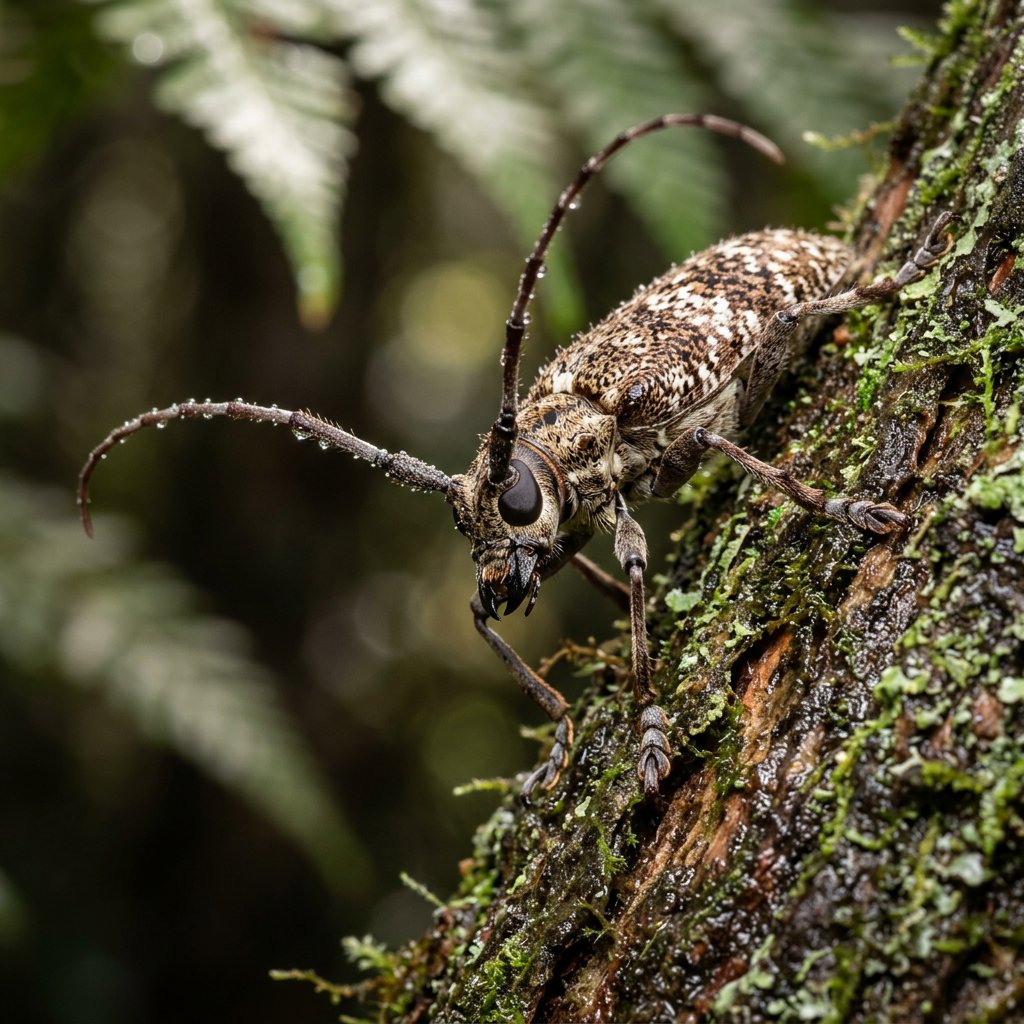
Known primarily as the Marbled Longhorn Beetle, this New Zealand native is a master of natural camouflage. Despite its bold, high-contrast patterns, it blends seamlessly into the lichen-covered bark of forest trees to hide from hungry birds. It belongs to the Cerambycidae family, a group famous for their impressively long "horns" that often stretch far beyond the length of their bodies.
🔍 How to Identify
- 📏 Extraordinary Antennae: Features long, elegant, jointed antennae that sweep backward, often exceeding the total length of the beetle's body.
- 🎨 Marbled Exoskeleton: A striking "tweed-like" pattern of velvet-black and creamy-yellow or white zig-zags across the wing covers (elytra).
- 🛡️ Cylindrical Build: A robust, elongated body shape with a tough exterior designed for navigating the tight crevices of tree bark.
🌲 Habitat & Ecology
- 🪵 The Forest Recycler: In its larval stage, this beetle lives inside dead or dying wood. It performs the vital ecological role of breaking down old timber and returning nutrients to the forest floor.
- 🌳 Native Residency: You are most likely to spot them in New Zealand’s native bush, frequently resting on the trunks of Nikau palms, Beech trees, or Kauri during the warmer months.
- 🔦 Nocturnal Tendencies: While they can be seen during the day, they are most active at twilight and are occasionally attracted to porch lights near forested areas.
⚠️ Safety & Toxicity
- ✅ Harmless Neighbor: The Marbled Longhorn is considered a "friend" to the gardener and hiker; it possesses no stinger and is not toxic to humans or pets.
- 🤏 Strong Mandibles: While not aggressive, they do have powerful jaws designed for chewing through wood. If handled roughly, they may deliver a small, non-venomous nip in self-defense.
✨ Fun Fact
🎻 Beetle Violins: If you pick one up (or if it feels threatened), the Marbled Longhorn can produce a distinct "squeaking" sound. It does this by rubbing its head against its thorax—a behavior called stridulation used to startle potential predators!
More Details








