Info
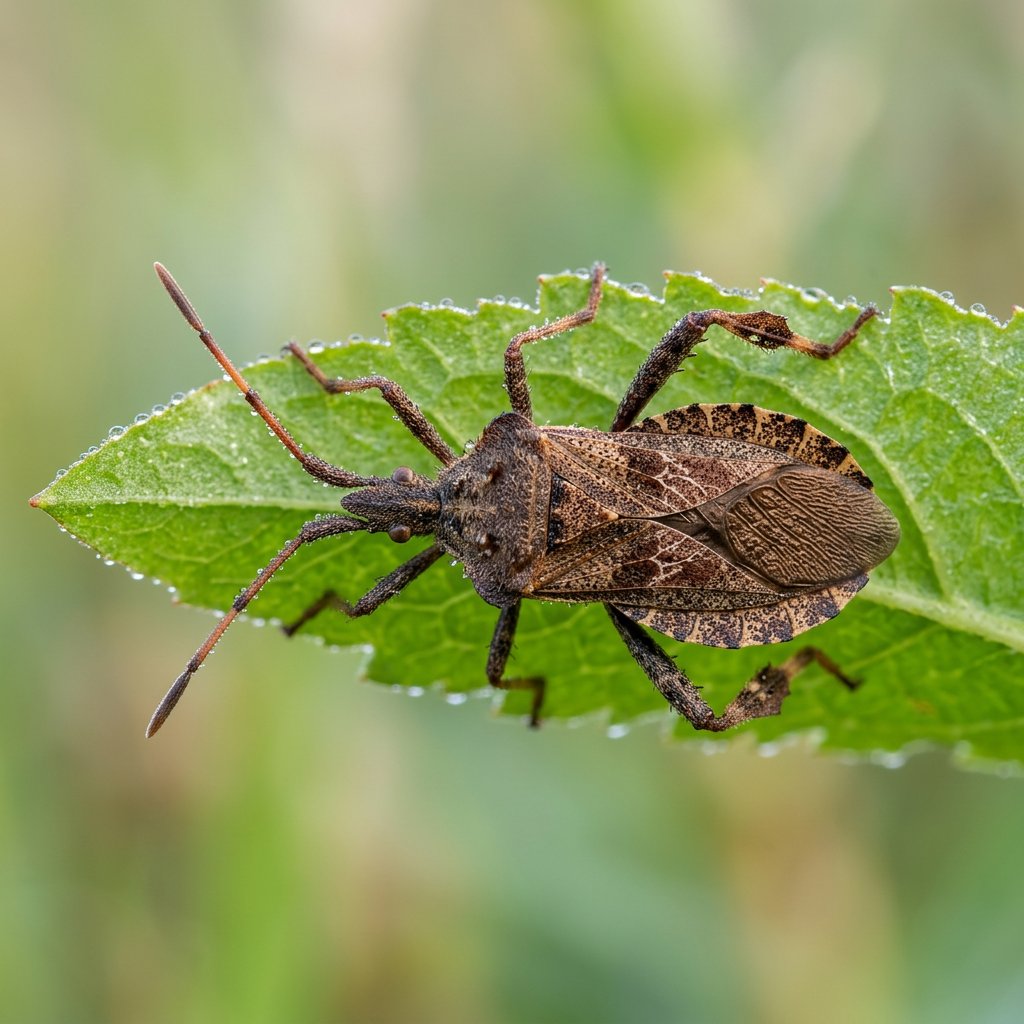
Known as the Dock Bug, Coreus marginatus is a master of disguise, blending perfectly into the dried leaves and stems of your garden. While its armored, shield-like body might look intimidating, it is actually a slow-moving sap-sipper often found sunbathing on Dock plants or brambles. It is one of the most common "true bugs" you’ll encounter, serving as a classic example of nature’s "leaf-footed" camouflage.
🔍 How to Identify
- 🟤 Speckled Armor: The body is a matte, leathery brown with fine dark speckles, mimicking the texture of a dried leaf or soil.
- 🛡️ Broad Shoulders: It features a very distinctive squared-off "pronotum" (the section behind the head) that looks like a pair of rugged, wide shoulders.
- 📡 Horns and Antennae: It has long, four-segmented antennae that are orange-red at the tips. If you look closely with a magnifying glass, you'll see two tiny "horns" (tubercles) protruding between the bases of the antennae.
🌲 Habitat & Ecology
- 😋 The Dock Diet: As the name suggests, its favorite host plants are Docks (Rumex) and Sorrels. It uses its needle-like mouthparts to suck juices from the seeds and stems.
- 🍓 Berry Bandit: In late summer, they often move onto brambles. If you grow raspberries or blackberries, you might find them hitching a ride on your harvest.
- 🍂 Winter Survival: Unlike many insects that die off in the cold, the Dock Bug overwinters as an adult, hiding in thick leaf litter or ivy before emerging in April to start the cycle again.
⚠️ Safety & Toxicity
- ✅ Harmless to Humans: The Dock Bug is completely non-aggressive. It does not possess a stinger and its mouthparts are designed for plants, not skin; it will not bite you.
- 👃 The "Stink" Defense: Like its cousins the Stink Bugs, it possesses scent glands. If it feels threatened or is squashed, it releases a pungent, bitter-smelling chemical that can linger on fingers.
- 🐾 Pet Safety: It is non-toxic to pets. However, the foul-tasting defensive spray is usually enough to make a curious cat or dog regret trying to eat one!
✨ Fun Fact
If you have ever picked a wild raspberry that tasted strangely bitter or "medicinal," you likely tasted the lingering defensive scent of a Dock Bug that had been resting on the fruit just moments before!
More Details








