Info
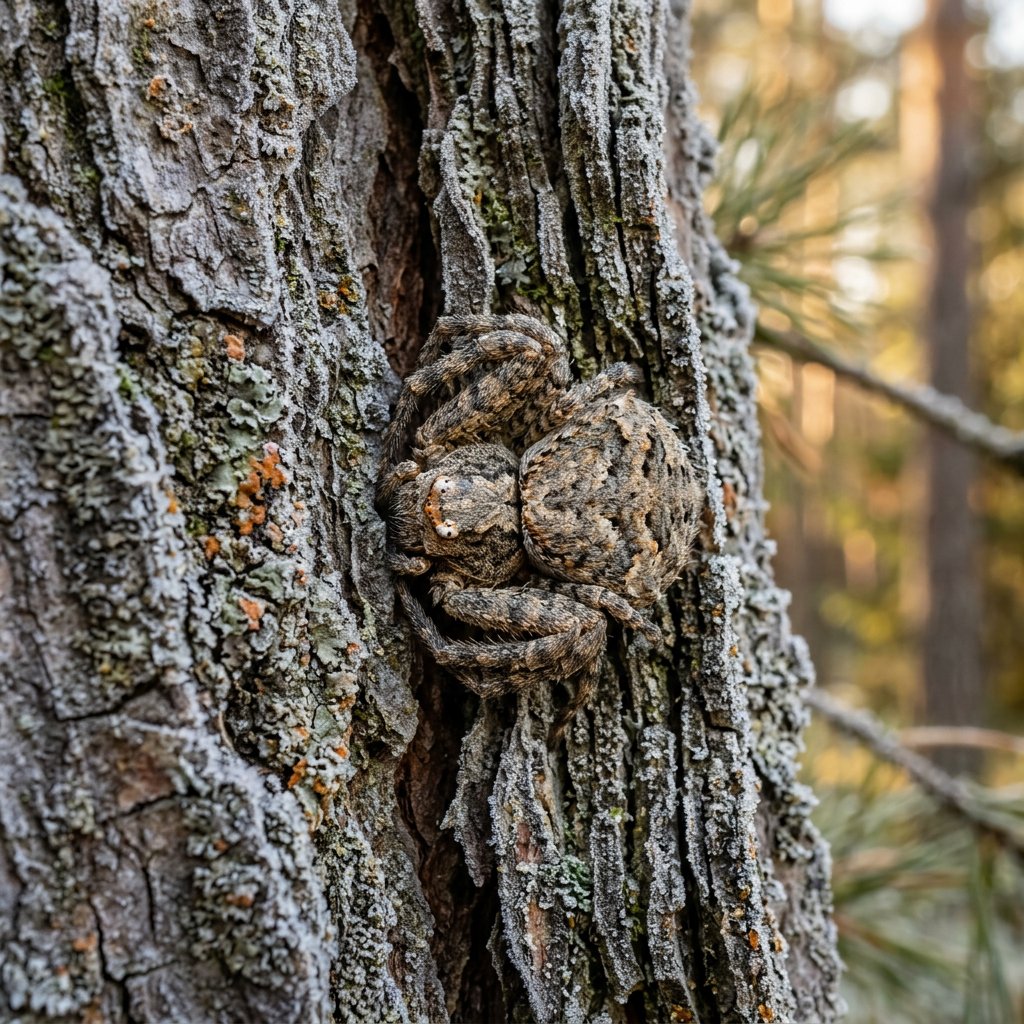
The Bark Crab Spider, belonging to the genus Coriarachne, is nature’s ultimate master of disguise. Often mistaken for a small piece of wood or a patch of lichen, these spiders have evolved a remarkably flat body to live life in the "squeeze"—the narrow crevices of tree bark. While their crab-like appearance might look intimidating, they are quiet, patient guardians of the trees they inhabit.
🔍 How to Identify
- 🦀 Crab-like Stance: Their first two pairs of legs are much longer than the others and are held out to the sides, giving them a distinct "crab-on-a-trunk" silhouette.
- 🥞 Flattened Profile: Their bodies are incredibly compressed (dorsoventrally flattened), allowing them to slide into cracks in bark that are only a few millimeters wide.
- 🎨 Mottled Camouflage: Their coloration is a complex mix of muddy browns, greys, and blacks, perfectly mimicking the texture of weathered wood or tree bark.
🌲 Habitat & Ecology
- 🥷 The Ambush Expert: These spiders do not spin webs to catch food. Instead, they sit perfectly still on tree trunks or wooden fences, waiting for a fly or beetle to wander too close before grabbing them with their powerful front legs.
- 🏡 Vertical Real Estate: You are most likely to spot them on older trees with shaggy bark, or even on the siding of wooden sheds and fences where they blend in seamlessly with the grain.
- 🦟 Natural Pest Control: They play a vital role in the ecosystem by keeping populations of bark-dwelling insects and small flies in check without the need for messy webs.
⚠️ Safety & Toxicity
- 🛡️ Status: Harmless to humans and pets. Bark Crab Spiders are very shy and would much rather hide in a crack than confront a human.
- 🤏 Biting Risk: While they do possess venom (used to paralyze their tiny prey), it is not medically significant. A bite is extremely rare and usually occurs only if the spider is accidentally crushed against the skin; the sensation is typically milder than a bee sting.
✨ Fun Fact
These spiders are so well-adapted to their environment that they can remain completely motionless for hours. Their camouflage is so effective that they are often only discovered when they move, appearing as if a piece of the tree itself has suddenly grown legs and walked away!
More Details








