Info
Though often found wandering among the bugs in your backyard, Cornu aspersum—the Common Garden Snail—is actually a land-dwelling mollusk. Originally from the Mediterranean, this slow-moving architect has traveled the world, becoming a staple of children’s stories and a frequent (if uninvited) guest in vegetable patches. While gardeners might see them as "leaf-munching pests," they are fascinating creatures that literally carry their history on their backs.
🔍 How to Identify
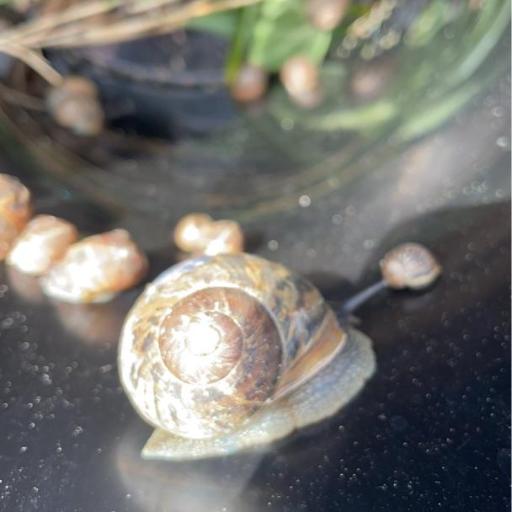
- 🐌 The Mottled Shell: A sturdy, coiled "mobile home" that is typically brownish-yellow with dark, zig-zagging streaks or flecks.
- 👀 Retractable Stalks: Two pairs of tentacles on the head; the long upper pair houses the eyes, while the shorter lower pair provides a sense of smell and touch.
- 🌊 The Mucus Trail: A characteristic "silver road" of glistening slime left behind on leaves or pavement, used to reduce friction and protect their soft bodies.
🌲 Habitat & Ecology
- 🥬 The Generalist Eater: These snails aren't picky; they love succulent leaves, tender seedlings, and even rotting fruit. In the garden, they act as both a recycler of waste and a tiny lawnmower for your prize hostas.
- 🌑 Moisture Seekers: Being mostly water, they are highly sensitive to drying out. You’ll find them most active during "snail weather"—damp nights, misty mornings, or immediately after a heavy rain.
- 🏠 Secret Hideouts: During the heat of the day, they retreat into dark, damp crevices under flower pots, logs, or thick groundcover to stay cool and hydrated.
⚠️ Safety & Toxicity
- 🛡️ Harmless but Slimy: They are physically harmless to humans and cannot bite or sting. However, they are famous for their "fright slime," which can be a bit sticky to wash off.
- 🧼 Hygiene Warning: Like many wild creatures, garden snails can carry parasites (such as lungworm) that are dangerous if ingested. Always wash your hands after handling them, and ensure pets don't make a snack out of them.
✨ Fun Fact
Snails are the ultimate "toothy" creatures! They don't have jaws; instead, they have a radula, a tongue-like organ covered in roughly 14,000 microscopic teeth that they use to scrape and rasp away at their food like a tiny sandpaper file.
More Details








