Info
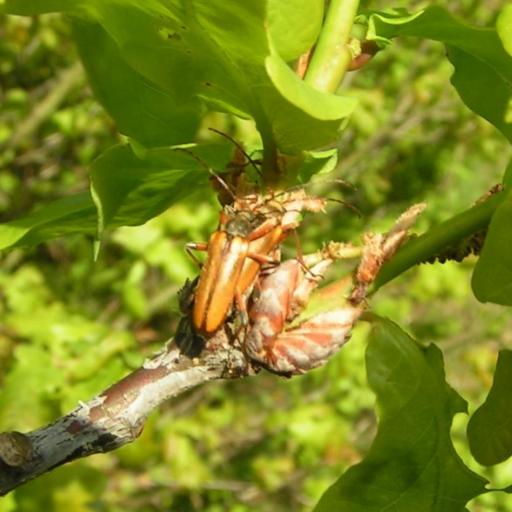
Known as a member of the diverse Longhorn Beetle family, Cortodera humeralis is a charming early-summer visitor to woodlands across Europe and parts of Asia. Often called the "Shoulder-spotted Longhorn," this beetle is a frequent sight on white blossoms, where it spends its days basking in the sun and fueled by nectar. While some of its larger relatives can look intimidating, this small beetle is a gentle pollinator that plays a vital role in the forest ecosystem.
🔍 How to Identify
- 🛡️ The "Shoulders": The most striking feature is the pair of reddish-orange or yellowish spots located at the "shoulders" (the base of the wing cases).
- 📡 Elegant Antennae: Like all longhorn beetles, it possesses long, segmented antennae that it uses to navigate and detect the scent of nearby flowers.
- 📐 Tapered Profile: Its body is relatively small (typically 7-11mm) and tapers toward the back, giving it a sleek, aerodynamic appearance.
🌲 Habitat & Ecology
- 🌸 Flower Power: You are most likely to spot the adults on Hawthorn, Rowan, or Umbrella-shaped flowers (umbellifers). They are active during the day, specifically from May to July, seeking out high-energy pollen.
- 🍂 Forest Nurseries: The larvae have a different lifestyle; they typically develop in the soil or within decaying wood and leaf litter, helping to break down organic matter and return nutrients to the earth.
⚠️ Safety & Toxicity
- ✅ Harmless: This beetle is entirely safe for humans. It does not possess a stinger, and its mandibles are designed for feeding on soft plant tissues, not for biting.
- 🐾 Pet Friendly: It is non-toxic and poses no threat to curious dogs or cats that might find one in the garden.
✨ Fun Fact
Unlike many beetles that hide under bark, Cortodera humeralis is a sun-lover. It has evolved to be a "mimic"—its quick movements and specific color patterns are thought to trick birds into thinking it might be a stinging insect, allowing it to feed on open flowers with less risk of being eaten!
More Details








