Info
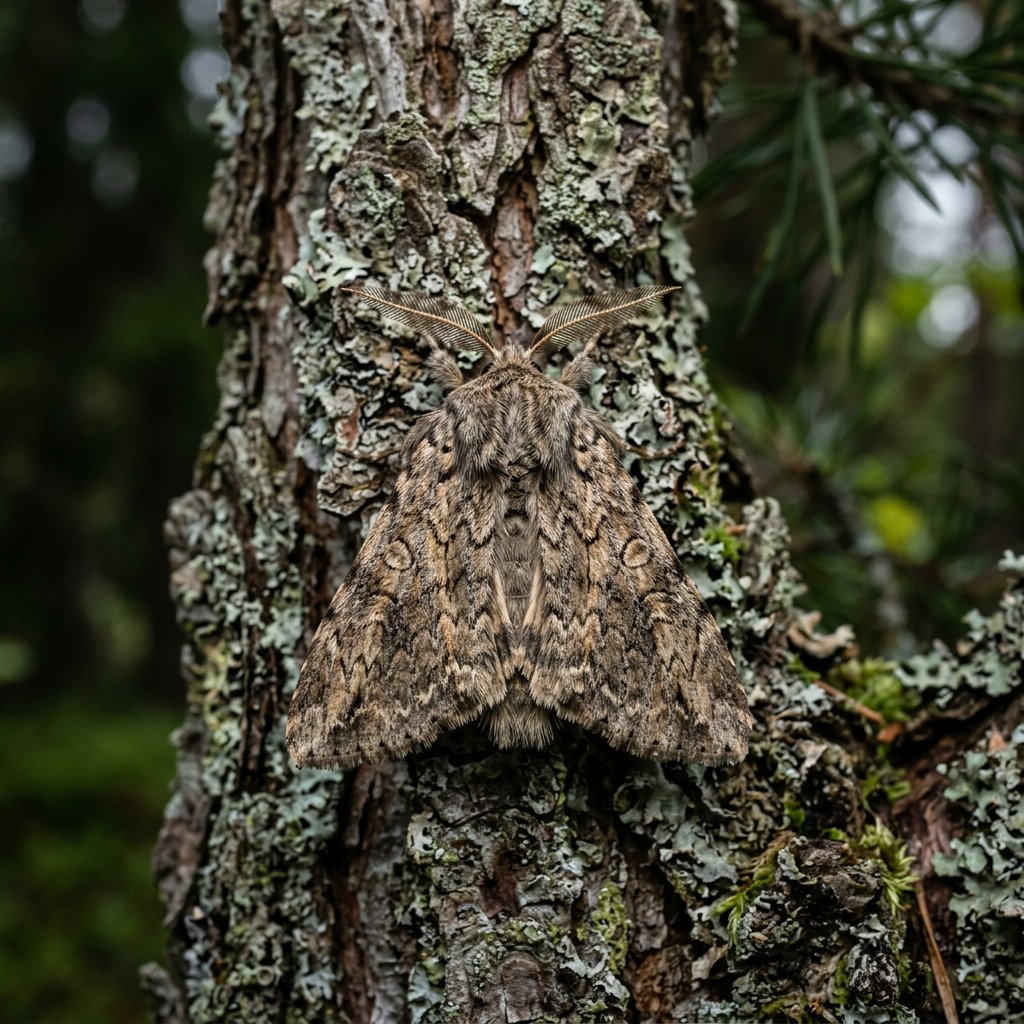
Known widely as the Pine Lappet, the Cosmotriche moth is a master of forest camouflage. These "chunky" moths belong to the Lasiocampidae family, famous for their incredibly fuzzy bodies and caterpillars that look more like patches of moss or bark than living insects. Often found resting on the trunks of evergreens, they are the quiet, furry ghosts of the coniferous woods.
🔍 How to Identify
- 🦋 Wing Pattern: The adult wings are typically a mottled ashy-gray or deep brown, featuring two distinct, small white spots on the forewings that look like tiny drops of paint.
- 🧶 Fuzzy Silhouette: They have extremely thick, hair-like scales covering their thorax and legs, giving them a stout, cuddly appearance that helps insulate them during cool nights.
- 🐛 The Caterpillar: The larvae are stunningly intricate, decorated with bluish-gray tones, orange accents, and lateral tufts of hair (lappets) that break up their shadow when resting on a branch.
🌲 Habitat & Ecology
- 🌲 Pine Specialists: As their name suggests, these insects are deeply tied to coniferous forests. They primarily feed on the needles of Scots Pine, Spruce, and Fir trees.
- 🌙 Nocturnal Hiders: While the adults are active at night and attracted to light, they spend their days perfectly motionless. Their wing shape and color mimic the texture of tree bark so effectively that even keen-eyed birds often fly right past them.
- 🍂 Life Cycle: They usually overwinter as young caterpillars, tucked away in bark crevices or among fallen needles, waiting for the spring warmth to resume feeding.
⚠️ Safety & Toxicity
- 👐 Handle with Care: While the adult moths are completely harmless, the caterpillars are a different story.
- 🩹 Urticating Hairs: The larvae possess fine, brittle hairs that can break off in the skin. For humans and curious pets, touching them can lead to "Lepidopterism"—a localized skin rash, itching, or mild swelling. It is best to observe their beauty without picking them up.
✨ Fun Fact
The name "Lappet" comes from the decorative "lappets" (skin flaps or hair tufts) found on the sides of the caterpillar. When the caterpillar presses itself flat against a twig, these tufts eliminate any shadow underneath its body, making it appear to be a literal part of the branch!
More Details








