Info
The Cotesia Glomerata, often called the "Cabbage White Parasitoid," is a tiny garden superhero that operates in the shadows. Often overlooked due to its miniature size, this wasp plays a critical role in controlling butterfly populations that would otherwise decimate your kale and cabbage patches. While the word "wasp" might sound intimidating, this insect is a gardener’s best friend and a fascinating example of nature's "biological pest control."
🔍 How to Identify
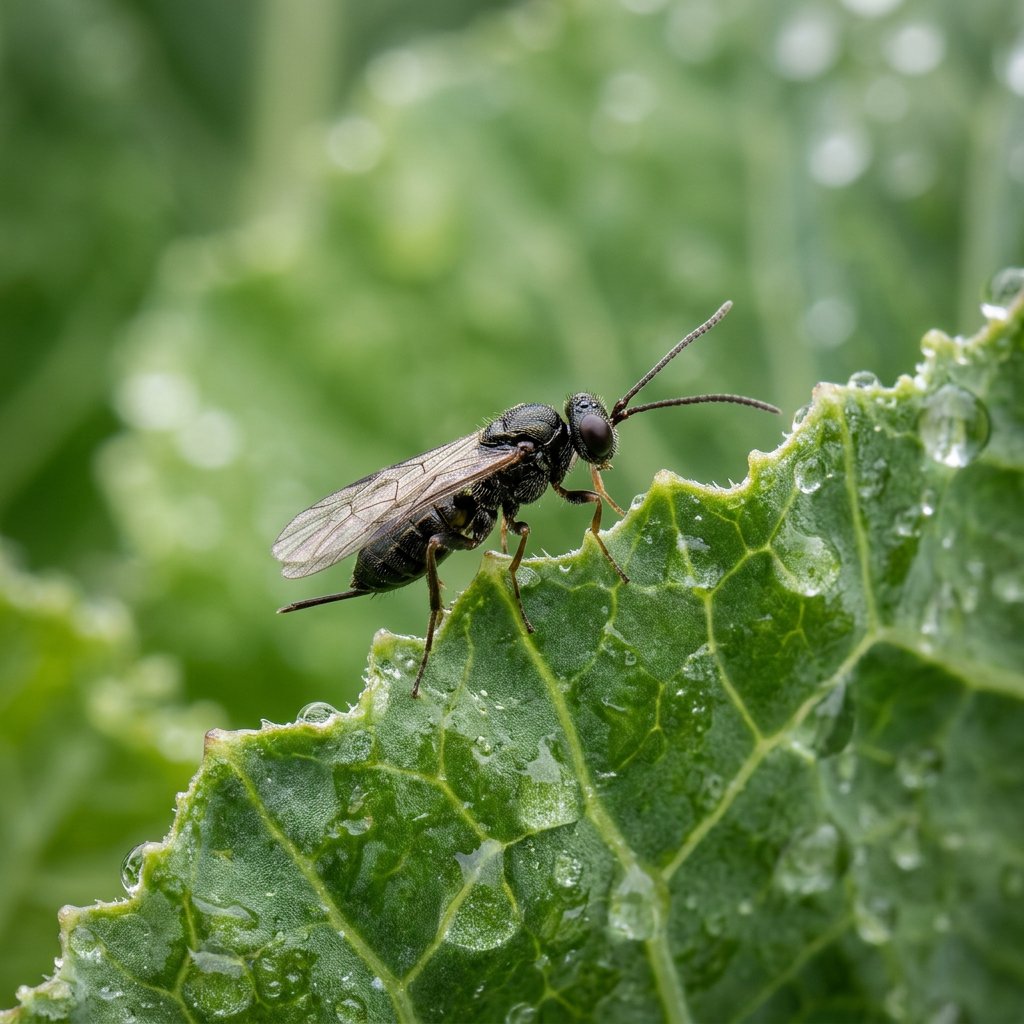
- 🪶 Miniature Build: At only 3–7mm long, these wasps are easy to miss. They look like tiny, slender black flies with two pairs of clear, iridescent wings and long, delicate legs.
- 🐜 Ant-Like Antennae: They possess long, highly sensitive antennae used to "sniff out" the chemical signals released by plants that are currently being eaten by caterpillars.
- 🟡 The Yellow "Tell": The most obvious sign of their presence isn't the wasp itself, but the clusters of bright yellow, cottony cocoons they leave behind on cabbage leaves or the shriveled remains of a host caterpillar.
🌲 Habitat & Ecology
- 🌿 The Cabbage Guardian: You will find these wasps wherever "Brassicas" (broccoli, kale, cauliflower, and cabbage) are grown. They are chemically tuned to find the Large White Butterfly larvae that feed on these specific plants.
- 🍎 Nectar Seekers: While the larvae are internal predators, the adult wasps are gentle nectar-drinkers. Planting "umbellifers" like dill, fennel, or cilantro provides the sugar they need to stay energized for their hunt.
- ⚔️ A Complex Life: A single female can lay dozens of eggs inside a single caterpillar. The larvae grow inside the host, carefully avoiding vital organs to keep the caterpillar alive and feeding until the wasps are ready to emerge and pupate.
⚠️ Safety & Toxicity
- ✅ Harmless to Humans: Despite being a wasp, Cotesia glomerata cannot sting humans or pets. Their "stinger" is actually an ovipositor, a specialized tool designed strictly for laying eggs inside caterpillars.
- 🧤 Garden Safe: They do not bite and have no interest in your picnic or your home. They are hyper-focused on their specific host, making them one of the safest insects to have around children and animals.
✨ Fun Fact
🧠 The Zombie Bodyguard: In a strange twist of biology, once the wasp larvae emerge from the caterpillar to spin their yellow cocoons, the caterpillar doesn't die immediately. Instead, it enters a "zombie" state where it stays nearby, spinning its own silk over the wasp cocoons and aggressively swinging its head to defend them from other predators until it eventually expires.
More Details








