Info
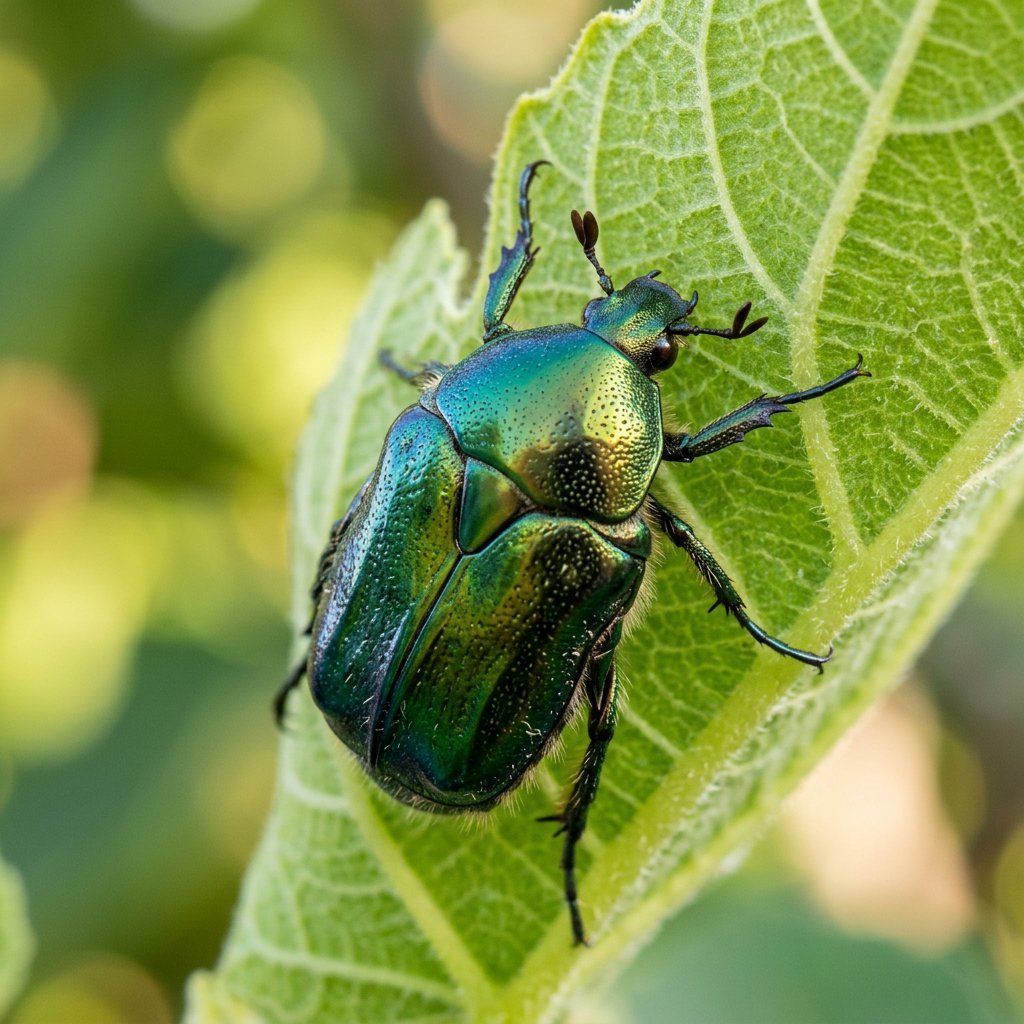
Often mistaken for a giant flying emerald, the Figeater Beetle is a gentle, clumsy giant of the southwestern United States and Mexico. While their loud, drone-like buzzing might startle you, these "living jewels" are harmless scavengers that signal the peak of summer heat. They are famous for their love of backyard fruit trees, often congregating in "parties" on overripe peaches and figs.
🔍 How to Identify
- 🪲 Velvety Shell: Their topside is a stunning matte, forest-green color with a velvet-like texture, while their underside is a brilliant, polished metallic green or gold.
- ✈️ Unique Flight: Unlike most beetles, they fly without lifting their wing covers (elytra). This makes them look and sound more like giant bumblebees or large hornets when in the air.
- 📏 Robust Shape: They are broad-shouldered and oval-shaped, typically growing to about an inch or more in length, making them one of the larger beetles you’ll encounter in the garden.
🌲 Habitat & Ecology
- 🍑 The Fruit Feast: As their name suggests, adults are attracted to soft-skinned, overripe, or damaged fruits. They don’t have strong biting mouthparts, so they rely on fruit that is already fermenting or "leaking" juice.
- 🍂 Compost Kings: Their larvae, often called "crawly backs," live in soil or compost piles. They play a vital role in the ecosystem by breaking down organic matter into rich soil. Interestingly, the larvae move by flipping onto their backs and using stiff hairs to "scoot" along.
- ☀️ Sun Seekers: You will mostly see them during the hottest part of the day, as they are highly active in direct sunlight and become sluggish as the temperature drops in the evening.
⚠️ Safety & Toxicity
- 🟢 Harmless Guest: Figeater Beetles are completely non-toxic and possess no stinger or venom. They are "all bark and no bite."
- 🧤 Mechanical Pinch: While they are safe to pick up, their legs have small hooks for gripping branches. If they land on you, it might feel like a tiny, prickly scratch, but they cannot cause any real harm to humans, pets, or children.
✨ Fun Fact
The larvae of the Figeater Beetle are some of the only insects that prefer to travel upside down! If you dig one up in your garden, it will immediately flip onto its back and wiggle away with surprising speed using the bristles on its spine.
More Details








