Info
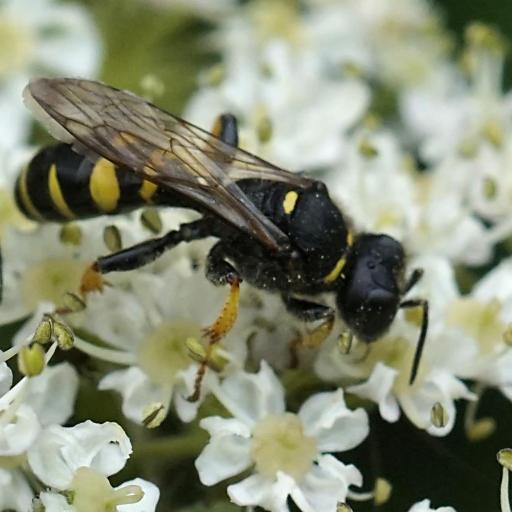
Meet the Lesser Digger Wasp, a solitary architect of the sandy underworld. While most wasps strike fear with their stings, the males of this species are famous for their bizarre and "fashionable" front legs, which look like tiny, translucent shields. Found across Europe and Asia, these slender insects are more interested in hunting flies and digging tunnels than bothering your backyard picnic.
🔍 How to Identify
- 🛡️ The Male "Shields": The most striking feature is found on the males—the front legs (tibiae) are massively expanded into wide, pale, plate-like structures covered in small dots.
- 🎨 Yellow and Black: They sport a classic warning pattern of bright yellow bands on a black abdomen, though their body is notably more elongated and slender than a common social wasp.
- 👁️ Broad Head: They have a very wide, square-shaped head with large compound eyes, which helps them spot fast-moving prey mid-air.
🌲 Habitat & Ecology
- 🏖️ Sandy Real Estate: You will most likely find them in areas with loose, sandy soil, such as heathlands, coastal dunes, or even the gaps between garden paving stones. The females are master excavators, digging deep burrows to house their young.
- 🪰 The Fly Hunter: Unlike many wasps that forage for sugar, these are dedicated predators. The females hunt various species of flies, paralyzing them with a sting and dragging them back to their burrows as a fresh food source for their developing larvae.
⚠️ Safety & Toxicity
- 🛡️ Peaceful Neighbors: As solitary wasps, they lack the aggressive "nest-defense" behavior of Yellowjackets or Hornets. They are not interested in humans and will only sting if you physically squeeze or step on them.
- 🐝 Minor Risk: Their sting is relatively mild compared to social wasps. They are considered highly beneficial for gardens as they provide natural pest control by reducing fly populations.
✨ Fun Fact
The male’s strange "leg shields" aren't for fighting! During courtship, the male places these shields over the female's eyes. Scientists believe the shields may act as a "perfume diffuser," passing pheromones to the female to convince her to mate, or simply acting as a visual signal that he is the right species.
More Details








