Info
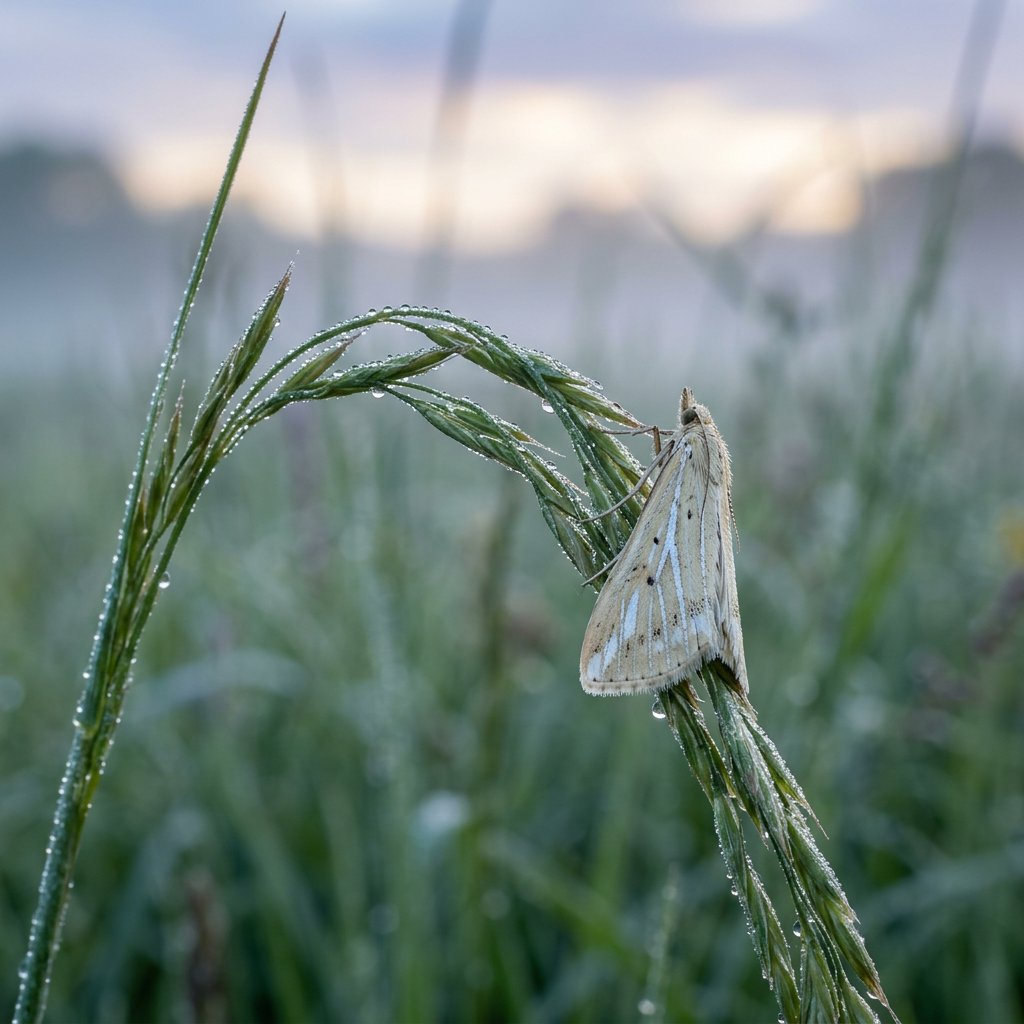
Known as the Inlaid Grass-veneer, this tiny moth is a master of camouflage hiding in plain sight. If you’ve ever walked through a meadow or your backyard and seen dozens of small, straw-colored "slivers" darting away from your feet, you’ve likely met this little lepidopteran. It is a common summer visitor across Europe and parts of North America, often resting vertically on grass stems to blend in perfectly with the dried foliage.
🔍 How to Identify
- 📏 The Profile: When at rest, it rolls its wings tightly around its body, forming a narrow, cigar-like tube that mimics a piece of dried grass.
- 🎨 The "Inlay" Pattern: The forewings are a beautiful golden-brown, featuring a bold, longitudinal white stripe that runs from the base toward the wing tip, ending in a sharp point.
- 👃 The Snout: Like other members of the Crambidae family, it has long, protruding mouthparts (labial palps) that look like a tiny nose or snout pointing forward.
🌲 Habitat & Ecology
- 🌾 The Grass Dweller: As the name suggests, this moth is inextricably linked to grasslands, marshes, and garden lawns. It spends its entire life cycle close to the ground.
- 🧶 Silken Tunnels: While the adults sip nectar, the larvae (caterpillars) live in "silken galleries"—tiny tubes they spin at the base of grass stems or among roots to stay protected while they feed.
- 🕊️ Low-Level Flight: They aren't long-distance travelers. Their flight is typically short, jerky, and low to the ground, usually occurring from dusk through the night, though they are easily disturbed during the day.
⚠️ Safety & Toxicity
- ✅ Harmless Friend: The Inlaid Grass-veneer is completely harmless to humans and pets. It does not bite, sting, or carry any known diseases.
- 🌱 Garden Impact: While the larvae eat grass, they rarely cause visible damage to lawns unless the population is unusually high. In most cases, they are a vital part of the local ecosystem, providing a food source for birds and predatory insects.
✨ Fun Fact
The Crambus genus is often called the "Close-wing" moth because of the way they hold their wings pressed tightly against their bodies. This posture is so effective that even a sharp-eyed bird can mistake them for a dead blade of grass!
More Details








