Info
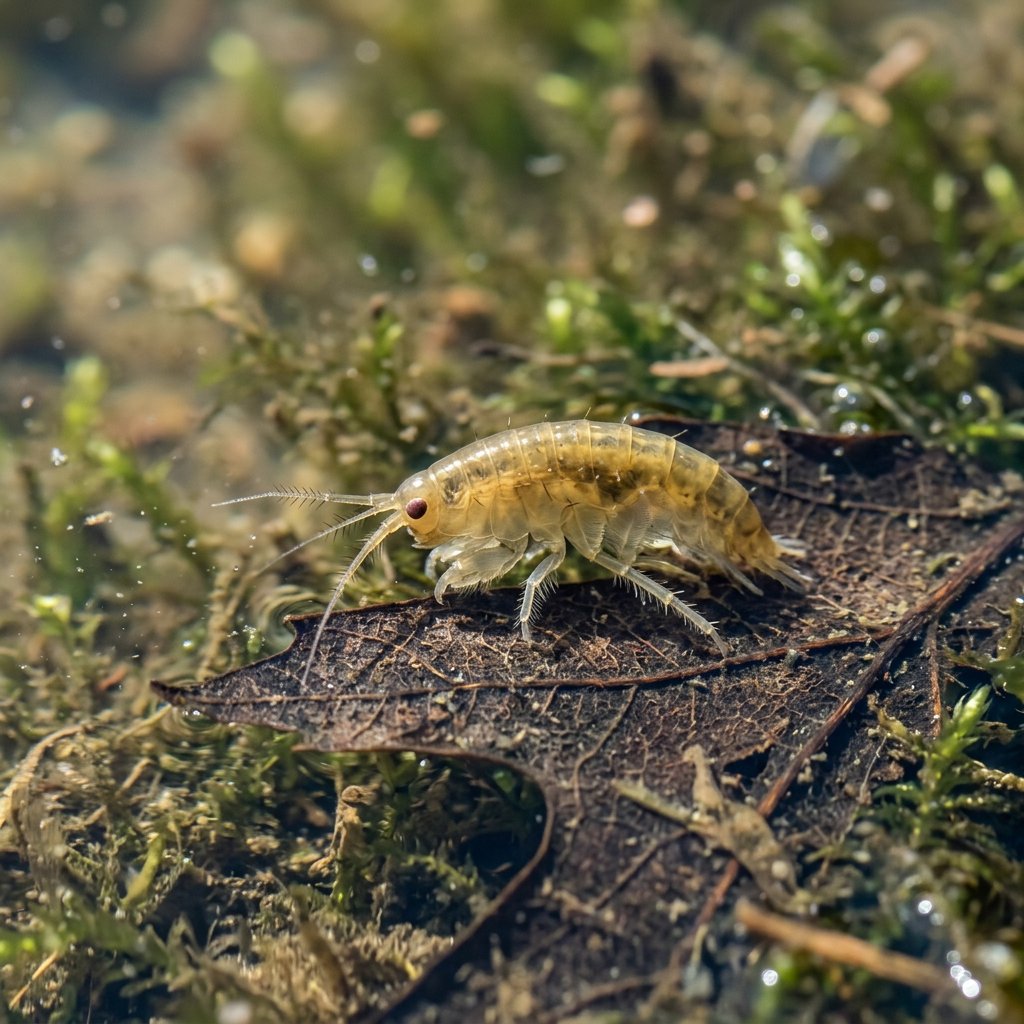
Often called "Scuds" or "Side-swimmers," Crangonyx are the busy janitors of the freshwater world. While they are frequently mistaken for aquatic insects, they are actually tiny crustaceans, more closely related to shrimp and lobsters than to beetles or flies. These resilient survivors are the unsung heroes of our ponds and springs, quietly recycling old leaves into new life.
🔍 How to Identify
- 🦐 The Crescent Shape: Their bodies are arched and flattened sideways (laterally compressed), making them look like a tiny, translucent comma swimming through the water.
- 🦵 Variable Legs: As members of the "Amphipod" group, they have different types of legs—some designed for walking along the bottom and others for swimming and jumping.
- 👻 Camouflage Colors: Usually appearing in shades of translucent gray, brown, or pale green, they are masters of blending into the muddy floor of a stream.
🌲 Habitat & Ecology
- 🍂 The Detritus Diet: They are essential scavengers. By eating decaying leaf litter and organic "muck," they prevent stagnant water from becoming overwhelmed by rotting material.
- 🐟 The Bottom of the Food Chain: Because they are rich in nutrients, they serve as a vital food source for trout, frogs, and predatory aquatic insects like dragonfly nymphs.
- 🌑 Hidden Worlds: While many live in surface ponds, several Crangonyx species are "stygobionts," meaning they live exclusively in the total darkness of underground caves and aquifers.
⚠️ Safety & Toxicity
- ✅ Harmless: Crangonyx are completely safe for humans. They do not bite, sting, or carry diseases that affect people or pets.
- 💧 Bio-Indicators: They are sensitive to chemical runoff. If you find a large population of these "scuds" in a stream, it is generally a sign of a healthy, oxygen-rich aquatic environment.
✨ Fun Fact
The name "Side-swimmer" isn't just a creative title—it's a literal description! Because their bodies are so thin and flattened, they often find it more efficient to zip through the water while laying completely on their sides.
More Details








