Info
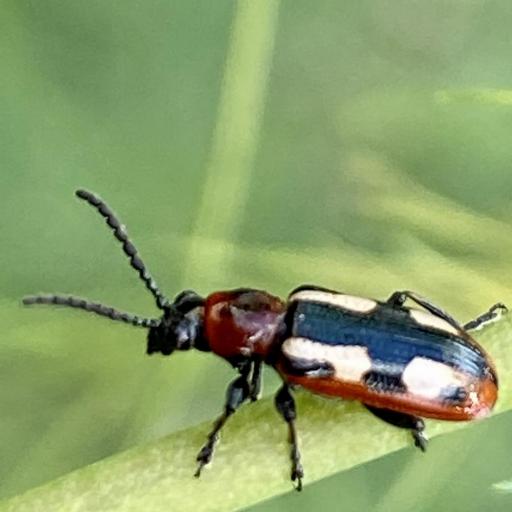
Known as the Common Asparagus Beetle, this dapper little insect looks like it’s dressed for a garden party in a patterned tuxedo. While its bold colors make it a favorite for macro photographers, it is a notorious "foe" to anyone trying to grow their own spring vegetables. It is a specialist feeder, meaning it has evolved specifically to find and feast on asparagus plants.
🔍 How to Identify
- 🐞 The Wing Pattern: Its most striking feature is its blue-black wing covers (elytra) adorned with six distinct creamy-yellow or white rectangular spots, often framed by a reddish-orange border.
- 🎨 The Thorax: The "neck" area or thorax is a bright, solid reddish-brown, which contrasts sharply against its dark, metallic head.
- 📏 Body Shape: It has an elongated, slender oval shape, typically measuring about 6–7 mm in length. It is much more colorful and "neat" looking than its cousin, the Spotted Asparagus Beetle.
🌲 Habitat & Ecology
- 🍴 The Picky Eater: This beetle is an asparagus specialist. Both the adults and their plump, grey, slug-like larvae feed on the tender spears in the spring and the feathery green fronds in the summer, which can weaken the plant's root system.
- 🍂 Overwintering Strategy: They are incredibly hardy. Once the garden cools down, adults crawl into hollow asparagus stems or under leaf litter to sleep through the winter, emerging exactly when the first asparagus tips poke through the soil.
- 🥚 Architectural Eggs: If you look closely at your plants, you might see tiny, dark-brown, cigar-shaped eggs standing perfectly upright in rows. This vertical "standing" position is a classic sign of Crioceris asparagi.
⚠️ Safety & Toxicity
- 🛡️ Harmless to Humans: These beetles do not bite, sting, or possess any venom. They are completely safe to handle, though they may try to drop to the ground and hide if they feel threatened.
- 🐾 Pet Safety: They are not toxic to cats or dogs. The primary "danger" associated with them is the garden owner’s temptation to use heavy chemical pesticides to protect their harvest.
✨ Fun Fact
If you hold a Common Asparagus Beetle close to your ear, you might hear it "complain." They are capable of stridulation, which means they rub parts of their body together to create a tiny, high-pitched squeak to startle predators!
More Details








