Info
Known commonly as the Tailed Cellar Spider, Crossopriza lyoni is a master of the corners. While its spindly, delicate frame might make it look fragile, this spider is a highly efficient "urban hunter" that has traveled from its native lands in the Old World to homes across the globe. Often mistaken for a common "Daddy Long-Legs," it is a quiet roommate that spends its life upside down, waiting for a stray mosquito to fly by.
🔍 How to Identify
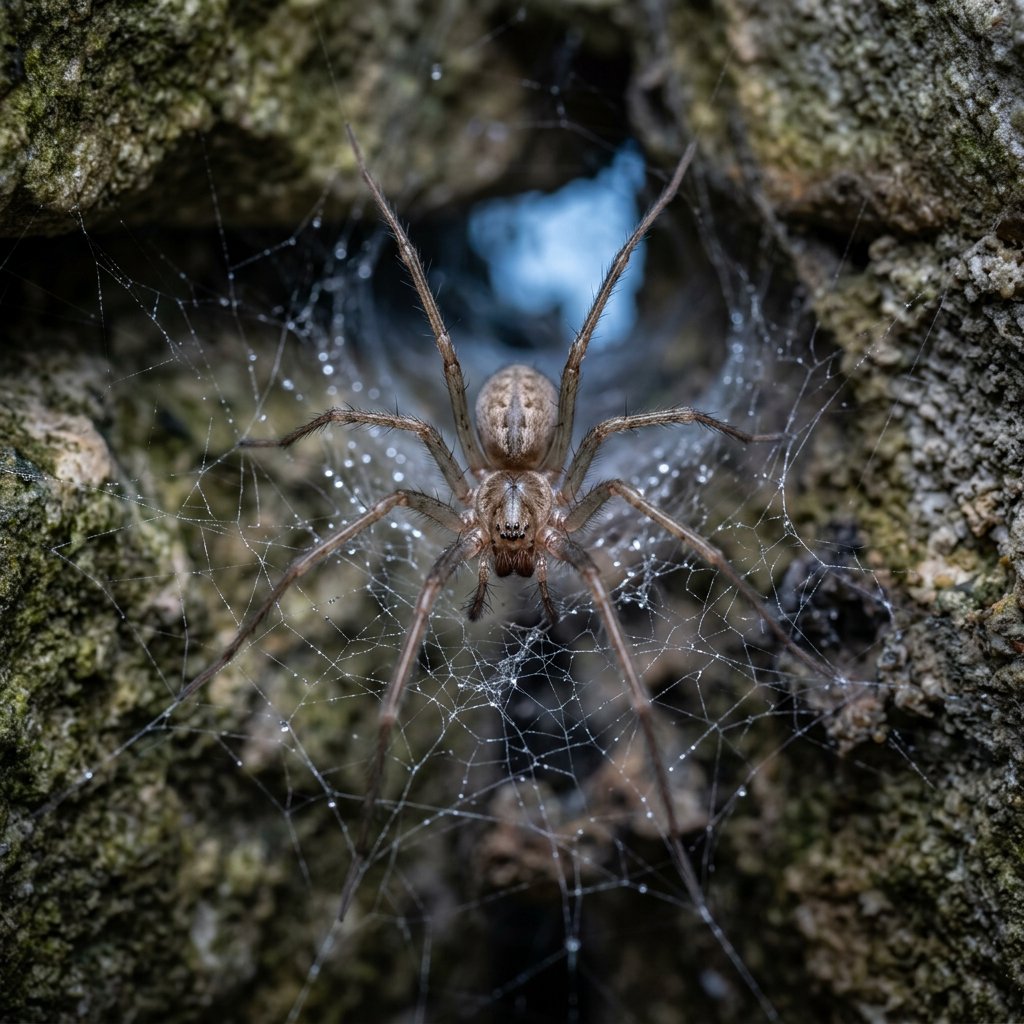
- 🕷️ The "Tail": Unlike other cellar spiders, this species has a distinctively high, squared-off abdomen that ends in a small, pointed protrusion or "tail" at the rear.
- 📏 The Legs: It possesses incredibly long, hair-like legs that are often translucent with subtle dark bands near the joints.
- 🎨 Body Pattern: Its body is typically a pale grey or sandy brown, featuring a dark stripe running down the center and intricate, mottled markings on the abdomen.
🌲 Habitat & Ecology
- 🏠 Urban Specialist: You are most likely to find this spider in "disturbed" habitats—meaning houses, garages, and sheds. It prefers the dry, high corners of ceilings where air currents are minimal.
- 🕸️ The Cobweb Architect: It builds a messy, non-sticky sheet of silk. While the web looks disorganized, it is a deadly trap for small flies, mosquitoes, and even larger, more "dangerous" spiders.
- 💃 The Gyroscopic Dance: When threatened, Crossopriza lyoni performs a rapid "whirling" or vibrating motion. It spins so fast in its web that it becomes a blur, making it nearly impossible for a predator to strike.
⚠️ Safety & Toxicity
- 🛡️ Status: Completely Harmless. Despite myths about cellar spiders having "deadly venom but tiny fangs," their venom is not medically significant to humans or pets.
- 🚫 Low Aggression: They are extremely shy and will almost always choose to vibrate or flee rather than bite. Their fangs are generally too small to effectively pierce human skin.
- 🐕 Pet Friendly: They pose no threat to curious cats or dogs and actually help keep your home free of pest insects.
✨ Fun Fact
Crossopriza lyoni is a world traveler! Scientists believe it originated in Africa or the Middle East, but because it loves living in human structures, it has "hitched a ride" in shipping crates and luggage to inhabit almost every warm climate on Earth.
More Details








