Info
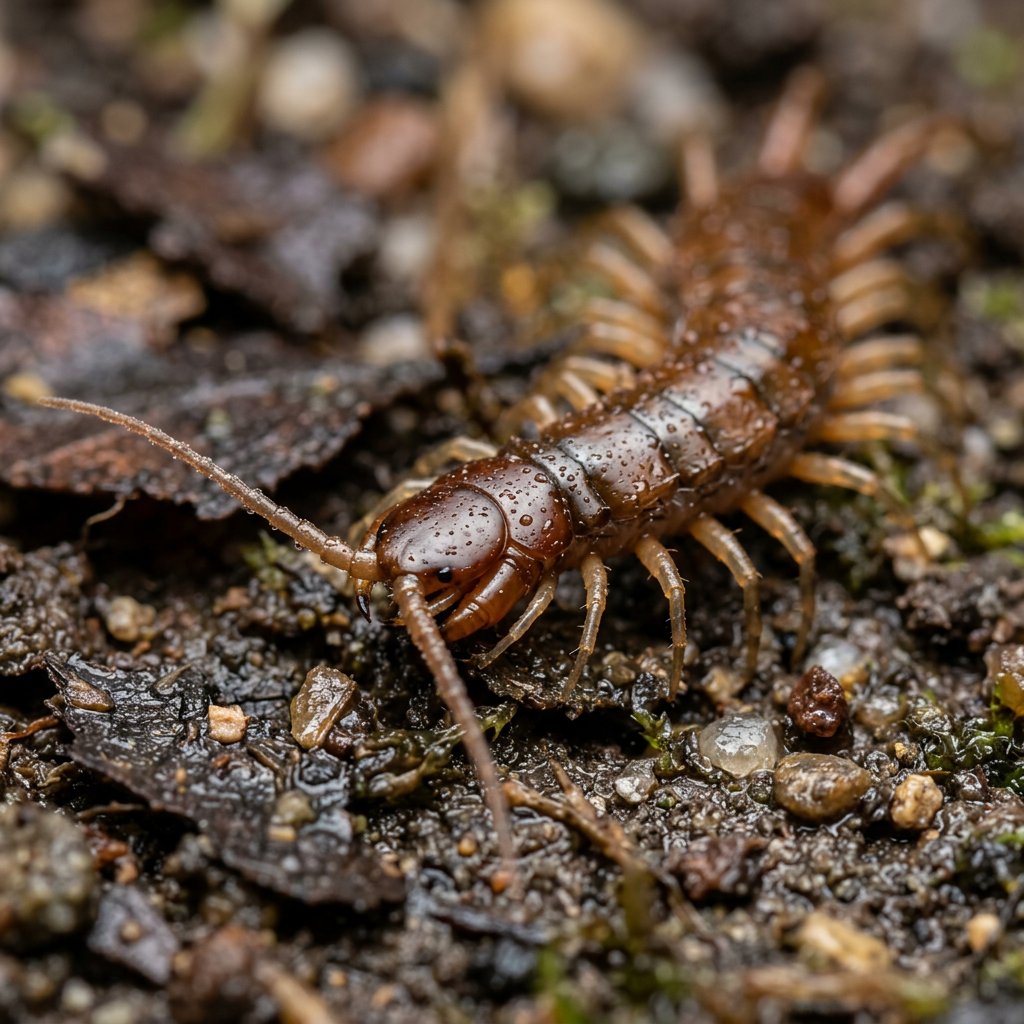
Meet the Garden Centipede, a sleek, subterranean athlete often found patrolling the soil under your favorite potted plants or garden stones. Though their many legs might seem intimidating, these tiny predators are the "hired guards" of the garden world, tirelessly hunting the pests that threaten your plants' roots. Because they spend most of their lives in the dark, they have evolved into master navigators of the underground.
🔍 How to Identify
- 🟤 The Body: A glossy, slender body that ranges in color from a pale yellowish-brown to a deep orange-tan.
- 🦵 The Legs: Look closely and you will find they have exactly 21 pairs of legs, which distinguishes them from many other common centipede species.
- 🚫 The Head: Remarkably, this species has no eyes at all! It relies entirely on its long, sensitive antennae to "feel" its way through the soil and detect the vibrations of nearby prey.
🌲 Habitat & Ecology
- 🍂 The Hideout: They are moisture-seekers that thrive in damp, dark environments. You’ll most likely find them under leaf litter, rotting logs, or tucked inside the drainage holes of outdoor planters.
- 🐜 Natural Pest Control: As active nocturnal hunters, they act as a biological control for garden pests. They primarily feast on mites, springtails, and small insect larvae, keeping the soil ecosystem balanced.
⚠️ Safety & Toxicity
- 🩹 Status: Generally harmless to humans and a "friend" to the gardener.
- 🐾 Details: Like all centipedes, they possess venom-injecting claws (called forcipules) to paralyze their prey. However, the Garden Centipede is typically too small and its "bite" too weak to pierce human skin. They pose no threat to dogs or cats, though very sensitive skin might experience minor irritation if the centipede is crushed against it.
✨ Fun Fact
Even though the Garden Centipede is completely blind, it can still "see" the light! It possesses light-sensitive organs all over its body, allowing it to sense when it has been exposed so it can quickly scuttle back into the safety of the shadows.
More Details








