Info
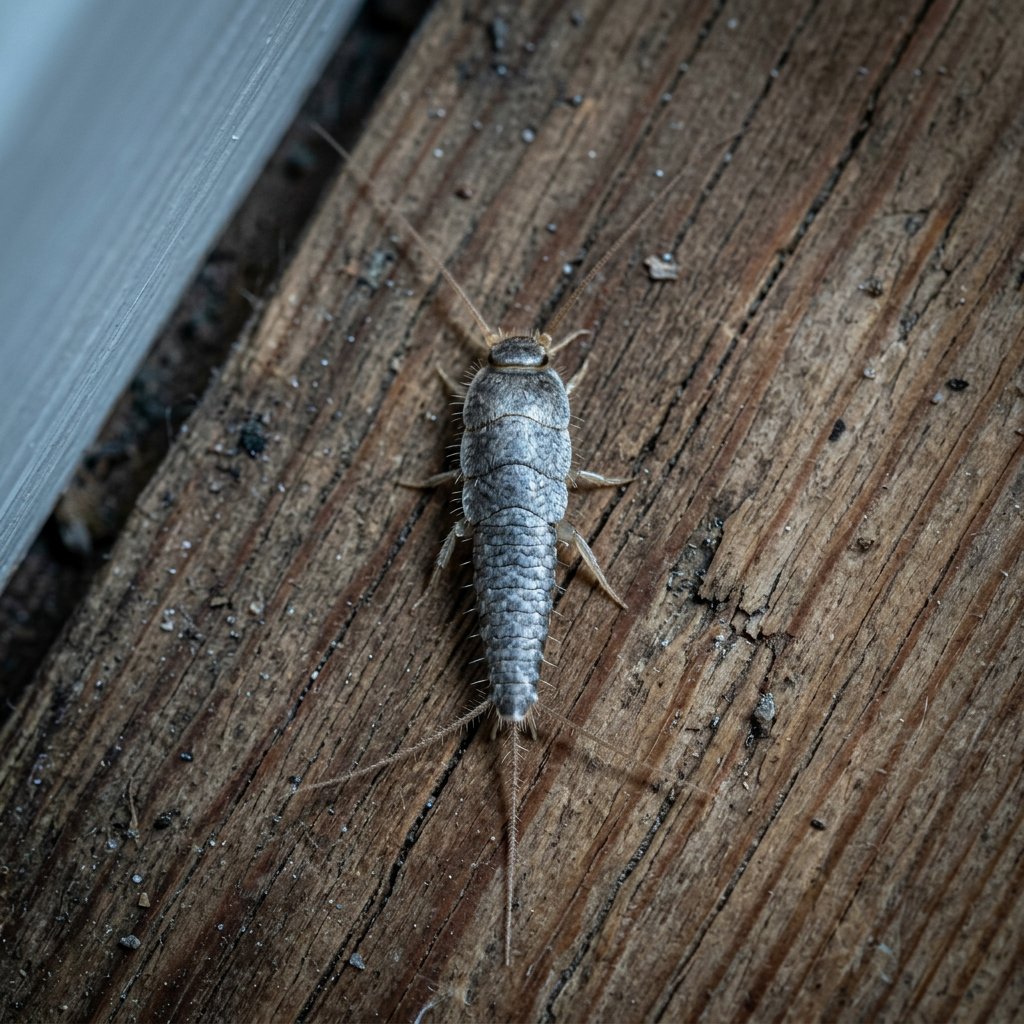
Often called the Long-tailed Silverfish or Grey Silverfish, this sleek scuttler is a true "living fossil," appearing much as its ancestors did millions of years ago. While their rapid, serpentine movement across a wall can be startling, these primitive insects are more interested in your bookshelf than they are in you. They are the larger, hairier, and more resilient cousins of the common silverfish, often making themselves at home in modern, dry buildings.
🔍 How to Identify
- 🥈 The Shimmer: They possess a carrot-shaped, flattened body covered in matte grey or silvery scales that rub off like dust when touched.
- 📏 The "Triple Tail": At the rear, they sport three incredibly long, hair-like appendages (cerci) that are often longer than their entire body.
- 📡 Extra-Long Antennae: Their "feelers" are exceptionally long and sweeping, used to navigate dark corners and detect vibrations in the air.
🌲 Habitat & Ecology
- 📚 The Paper Gourmet: These insects are specialized scavengers with a "sweet tooth" for starch. They thrive on the glue in bookbindings, wallpaper paste, and the cellulose in paper or cardboard.
- 🏠 Modern Roommates: Unlike common silverfish that need damp bathrooms, the Long-tailed Silverfish is perfectly happy in dry, warm environments. They are frequently found in new apartment complexes, libraries, and office archives.
- ⏳ Slow & Steady: They are incredibly long-lived for insects, sometimes reaching 8 years of age. They continue to molt (shed their skin) throughout their entire adult lives, which is a very rare trait in the insect world.
⚠️ Safety & Toxicity
- 🛡️ Harmless Nuisance: The Long-tailed Silverfish is completely non-toxic and lacks any form of stinger or venomous bite.
- 🚫 Low Risk: They do not spread diseases and are not interested in humans or pets. The only "safety" concern is for your precious documents, vintage photos, or silk clothing, which they may nibble on if the population grows too large.
✨ Fun Fact
Because they can live for several years without food, Long-tailed Silverfish are world-class hitchhikers. They often move into new homes by hiding inside the corrugated channels of cardboard shipping boxes!
More Details








