Info
Often called the Lead-colored Shark, Cucullia lucifuga is a master of disguise in its adult form, blending perfectly into weathered wood or stony ground. However, its youth is spent as one of the most stylish caterpillars in the meadow, sporting a high-contrast "polka-dot" outfit that signals its presence to everyone. This moth is a common sight in the cooler, mountainous regions of Eurasia, where it plays a quiet but vital role in the nocturnal ecosystem.
🔍 How to Identify
- 🦋 The "Shark" Silhouette: The moth earns its nickname from its long, narrow forewings that taper to a point. When resting, it holds its wings tightly against its body, creating a streamlined, shark-like profile.
- 🔘 Leaden Camouflage: The adult wings are a uniform silvery-grey or "lead" color, decorated with very fine, subtle black streaks that mimic the natural grain of tree bark.
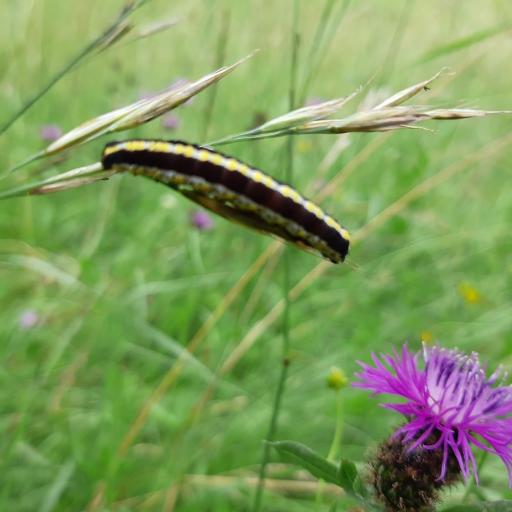
- 🟡 The Flashy Larva: The caterpillar is the true showstopper—a velvety jet-black body adorned with brilliant rows of yellow or orange-red spots along the back and sides.
🌲 Habitat & Ecology
- 🍽️ A Taste for Composites: As caterpillars, they are specialized feeders. You will most likely find them munching on the flowers and leaves of the Aster family, particularly Hawkweeds (Hieracium) and Sow-thistles.
- 🌙 Master of the Night: The adults are strictly nocturnal. While they spend their nights seeking nectar, they spend their days in a state of "crypsis," pressing themselves flat against rocks or fence posts to remain invisible to birds.
- 🏔️ Cooler Climates: This species thrives in open landscapes, such as alpine meadows, forest edges, and rocky slopes where their host plants are abundant.
⚠️ Safety & Toxicity
- 🛡️ Neutral Resident: Cucullia lucifuga is entirely harmless to humans. They do not possess a stinger, and they do not bite.
- 🐾 Warning Colors: While the caterpillar's bright spots look "dangerous," they are a form of aposematism (warning coloration). They aren't venomous to touch, but the colors tell birds that they likely taste very bitter and aren't worth the effort of a snack.
✨ Fun Fact
- 💡 The scientific name lucifuga literally translates from Latin as "shunning the light." Ironically, despite this name, they are frequently discovered by researchers using light traps, as they cannot resist the glow of a lantern on a dark mountain night!
More Details








