Info
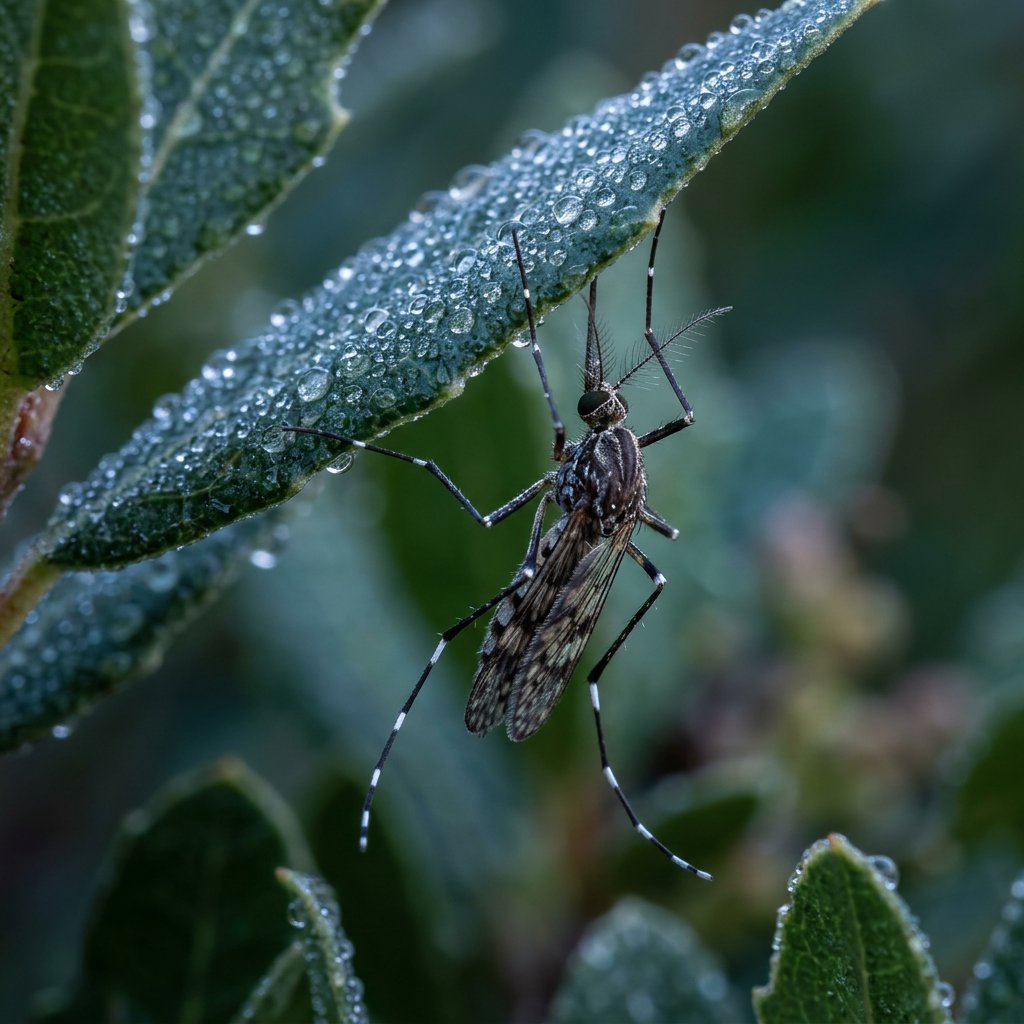
Often called the Ornamented Mosquito, Culiseta longiareolata is a true giant among its peers. Because of its impressive size and striking "racing stripes," it is frequently mistaken for a more dangerous species, like the Asian Tiger Mosquito. However, despite its intimidating appearance, this mosquito is more of a backyard observer than a fierce predator of humans.
🔍 How to Identify
- 📏 Impressive Scale: This is one of the larger mosquito species you’ll encounter, often appearing nearly double the size of the common house mosquito (Culex pipiens).
- 🦓 Bold Patterns: It features distinct white-and-black banding on its legs and a series of vivid, light-colored longitudinal lines on its thorax, giving it a very "ornate" look.
- 🪽 Transparent Wings: Unlike some of its cousins that have spotted wings, this species has clear, long wings that hum at a lower pitch due to their larger size.
🌲 Habitat & Ecology
- 💧 Urban Water Lovers: These mosquitoes are masters of adaptation. You will find their larvae in almost any standing water, ranging from clean garden ponds and birdbaths to neglected gutters and even highly saline or polluted puddles.
- 🐦 The Bird Specialist: While they are active flyers, they are primarily "ornithophilic," meaning they prefer to feed on the blood of birds rather than mammals. They play a quiet role in the ecosystem as both a food source for bats and as occasional pollinators.
- ⚔️ Aggressive Larvae: In the aquatic stage, these larvae are surprisingly tough. They have been known to exhibit "cannibalistic" tendencies, eating the larvae of other mosquito species when food is scarce in their puddle.
⚠️ Safety & Toxicity
- 🦟 Low Human Interest: While the females do require blood to produce eggs, they rarely target humans. If you are bitten, it is usually because their preferred avian hosts are unavailable.
- 🧴 Standard Nuisance: A bite from this species typically results in a standard itchy welt. While they can technically carry certain avian-related viruses, they are not considered a primary vector for major human epidemics in most regions.
- 🛡️ Prevention: To keep them away, simply tip over any standing water in your yard. Because they are large and relatively slow flyers, they are much easier to spot and swat than smaller mosquitoes.
✨ Fun Fact
- 🍴 The Hungry Hunter: Culiseta longiareolata larvae are so large and dominant in their water habitats that they are sometimes used in biological studies to see if they can help "crowd out" or eat the larvae of more dangerous, disease-carrying mosquitoes!
More Details








