Info
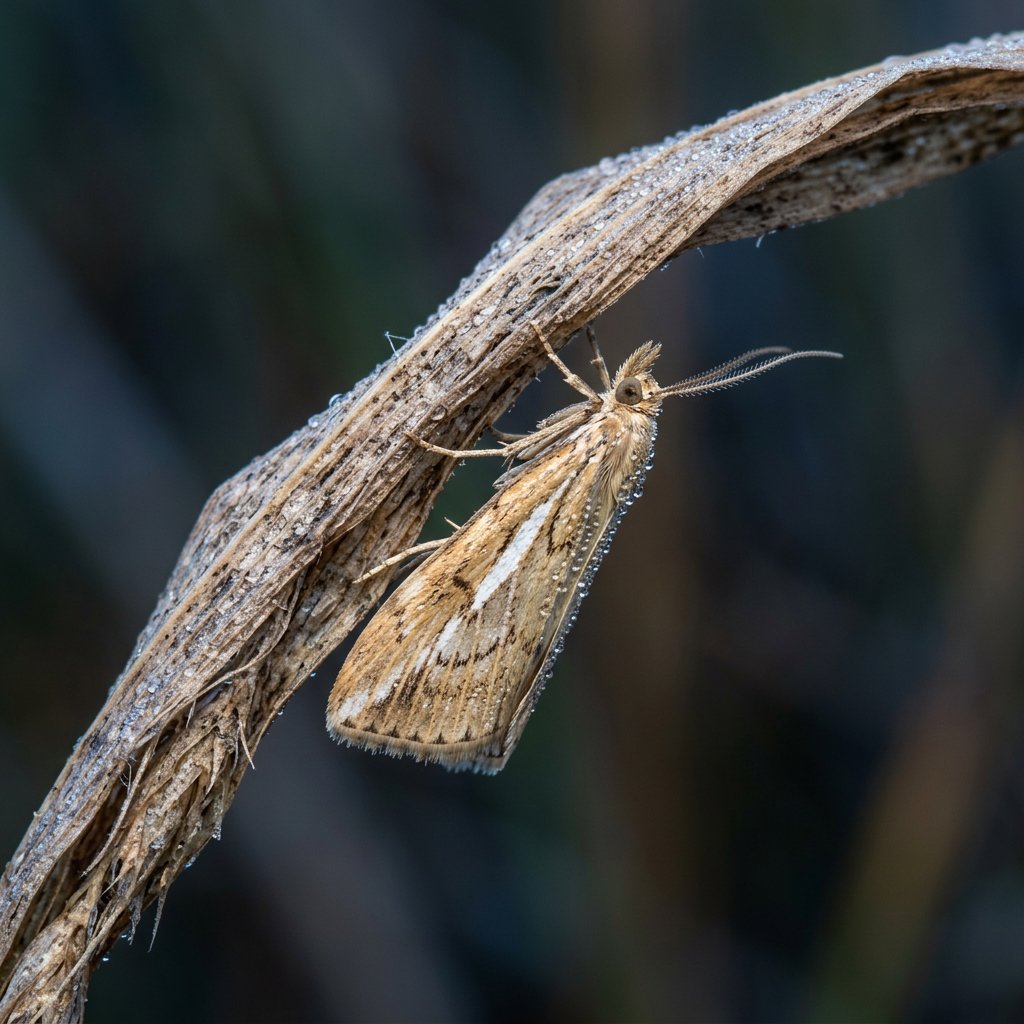
Often called the Grass-veneer moth, this little master of disguise is a frequent visitor to backyard lawns across Australasia and parts of Asia. At rest, it looks more like a dried, broken blade of grass than a living creature, blending perfectly into its environment to avoid hungry birds. It belongs to the "snout moth" family, named for the elongated mouthparts that stick out like a tiny, pointed nose.
🔍 How to Identify
- 👃 The Snout: Features long, protruding labial palps that extend forward, giving the head a distinctively pointed appearance.
- 📏 Resting Posture: Unlike many moths that spread their wings flat, this species wraps its wings tightly around its body, creating a slender, tube-like shape.
- 🎨 Wing Patterns: The forewings are typically a mix of creamy white and pale brown, marked with fine dark lines and a subtle "wedge" or "cuneiform" pattern near the edges.
🌲 Habitat & Ecology
- 🌱 Lawn Life: They are most commonly found in grasslands, meadows, and suburban gardens. Their larvae (caterpillars) live at the base of grass clumps, often building silken galleries near the soil.
- 🌙 Night Moves: While they can be easily kicked up from the grass during the day, they are primarily nocturnal. They are highly attracted to artificial light and are often seen resting on window screens at night.
- 🥗 Dietary Role: While the adults sip nectar, the larvae are "grass-feeders." In very high numbers, they can cause small brown patches in lawns, but they are generally considered a minor garden resident rather than a major pest.
⚠️ Safety & Toxicity
- ✅ Harmless Friend: The Culladia cuneiferellus is completely harmless to humans. It does not bite, sting, or possess any irritating hairs.
- 🐶 Pet Safety: These moths are non-toxic to dogs, cats, and other household pets. If your cat manages to catch one, the only "danger" is a tiny bit of moth-dust on their nose!
✨ Fun Fact
When this moth senses danger, it doesn't always fly away; instead, it often drops straight down into the thatch of the grass and remains perfectly still. This "play dead" tactic, combined with its grass-like color, makes it nearly impossible for a predator to find it once it hits the ground.
More Details








