Info
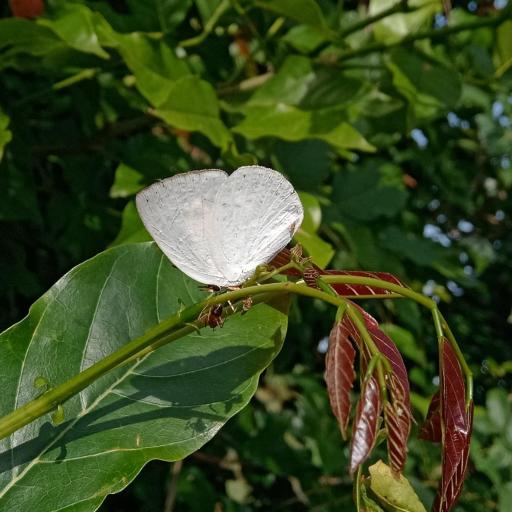
Often called the "Indian Sunbeam," this butterfly is a master of visual deception. While it may look like a shimmering piece of silver foil when resting, it reveals a burst of fiery metallic orange the moment it takes flight. It is a favorite among photographers for its "flash-and-dazzle" defense mechanism, which confuses predators by blinking between bright color and dull silver.
🔍 How to Identify
- 🥈 The "Mirror" Underside: The most striking feature is the underside of the wings, which is a brilliant, satiny silver-white with no prominent markings, making it look like a reflective leaf.
- 🔥 Metallic Upperside: Males possess radiant, coppery-red or deep orange wings with thin black borders. Females are more subtle, featuring white or pale cream patches surrounded by broad dark brown borders.
- 📐 Angular Wing Shape: Their wings have a distinct, slightly squared-off shape at the tips, which helps them execute incredibly fast, jerky flight maneuvers.
🌲 Habitat & Ecology
- 🌿 The Rosary Pea Connection: These butterflies are usually found fluttering around their favorite host plants, specifically the Abrus precatorius (Rosary Pea) and various Leguminosae (pea family) trees.
- 🛡️ Sun-Basking Behavior: They are active during the day and love to bask in the sun on the tops of leaves. If disturbed, they dive into thick foliage, instantly closing their wings to vanish against the light and shadows using their silvery undersides.
- 🥤 Mud-Puddling: Males are often seen "puddling"—drinking moisture from damp patches of ground to intake essential minerals and salts required for mating.
⚠️ Safety & Toxicity
- ✅ Harmless Friend: The Indian Sunbeam is completely harmless to humans. It does not bite, sting, or carry any known diseases.
- 🍃 Safe for Gardens: While the caterpillars eat the leaves of specific host plants, they are rarely numerous enough to cause any significant damage to a garden or landscape.
✨ Fun Fact
The caterpillars of the Indian Sunbeam have a "secret bodyguard" service! They possess specialized organs that secrete a sugary liquid to attract ants. In exchange for this sweet treat, the ants protect the caterpillar from wasps and spiders.
More Details








