Info
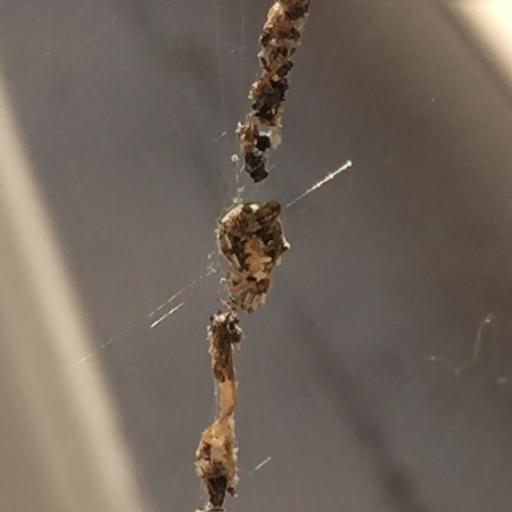
Meet the tiny architect of the "trash-line," a spider that turns its dinner leftovers into a high-tech cloaking device. Often called the Humpbacked Trash-line Orbweaver, Cyclosa turbinata is a master of camouflage that prefers to hide in plain sight rather than under a leaf. If you spot what looks like a string of dead bugs and silk in a garden web, look closer—one of those "scraps" is actually a very clever hunter!
🔍 How to Identify
- 🕸️ The Trash-Line: Their most famous feature is the vertical stabilimentum, a line of debris (prey remains, egg sacs, and plant bits) woven into the center of the web.
- 🐫 Humped Abdomen: They possess a distinctive, teardrop-shaped abdomen with two prominent "humps" or tubercles near the front, giving them a lumpy silhouette.
- 🥈 Silver Palette: Their bodies are usually mottled with shades of silver, grey, and charcoal, perfectly mimicking the color of dried-up prey or withered leaves.
🌲 Habitat & Ecology
- 🌳 Garden Sentinels: You’ll typically find them in the sunny margins of forests or nestled in garden shrubs. They build their webs at eye level, often stretched between twigs or across sturdy perennials.
- 🎭 The Art of Deception: The spider sits perfectly still in the middle of its trash-line. By matching the texture and color of the debris, it becomes nearly invisible to birds and predatory wasps that would otherwise turn it into a meal.
- 🦟 Pest Control: As active orb-weavers, they are highly efficient at catching small flying insects like gnats, fruit flies, and aphids, making them a "friend" to any gardener.
⚠️ Safety & Toxicity
- ✅ Harmless Neighbor: These spiders are not aggressive and are considered "friendly" garden residents. They have no interest in humans and will usually stay frozen or drop to the ground if disturbed.
- 🕷️ Minimal Risk: While they do possess venom to subdue their tiny prey, it is not medically significant to humans or pets. A bite is extremely rare and usually results in nothing more than minor, temporary redness.
✨ Fun Fact
The Cyclosa turbinata is such a perfectionist that it will actually arrange its "trash" in lumps that are the exact same size and shape as its own body. This creates a row of "decoy spiders" to confuse predators, who often end up attacking a ball of old fly wings instead of the spider itself!
More Details








