Info
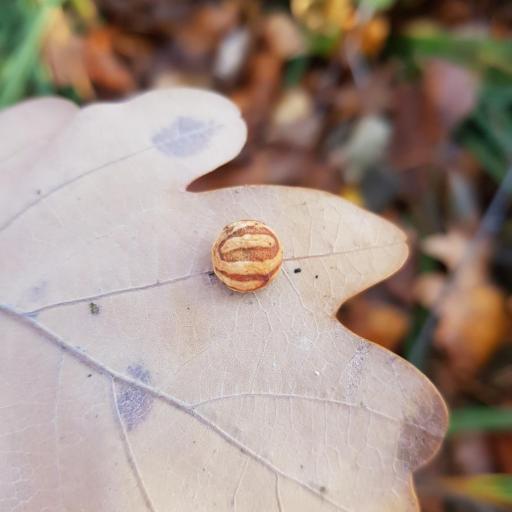
Often called the Striped Pea Gall Wasp, this tiny architect is more famous for its "art" than its physical appearance. It effectively "hacks" oak trees, using chemical signals to force the tree to grow colorful, candy-striped bunkers for its larvae. While it belongs to the wasp family, you will likely never see the insect itself—only the stunning, marble-like structures it leaves behind on the undersides of leaves during the late summer.
🔍 How to Identify
- 🎨 The Gall: The most recognizable feature is a spherical, slightly flattened growth (gall) about 6–10mm in diameter.
- 🍭 Vivid Striping: Unlike other gall wasps, Cynips longiventris creates galls with distinct, parallel stripes of cherry red, pink, or purple against a creamy yellow or white background.
- 🍃 Placement: These "marbles" are always found firmly attached to the veins on the underside of Oak leaves, never on the stems or upper surfaces.
🌲 Habitat & Ecology
- 🌳 Oak Specialists: These insects are highly specific, found almost exclusively on the English Oak (Quercus robur) and Sessile Oak (Quercus petraea).
- 🔄 Dual Life Cycle: They have a fascinating "alternation of generations." The striped galls you see in autumn produce only females. These females then lay eggs in oak buds to produce a spring generation that looks completely different and lives in tiny, fuzzy green galls.
- 🐦 Food Web Role: While the gall protects the larva from the elements, it is a favorite target for birds (like tits) and even smaller "parasitoid" wasps that try to sneak their own eggs inside.
⚠️ Safety & Toxicity
- 🐝 Gentle Nature: Despite the "wasp" name, these insects do not sting humans or pets. They lack the aggressive defensive behavior of common social wasps.
- 🍂 Tree Health: While a heavy infestation might look alarming, they are considered "cosmetic" pests. They rarely cause any long-term harm to the health or growth of the oak tree.
✨ Fun Fact
The larvae inside these galls are master manipulators; they secrete specialized proteins that redirect the tree’s nutrients toward the gall, ensuring they have a constant food supply while the rest of the leaf might be dying off!
More Details








