Info
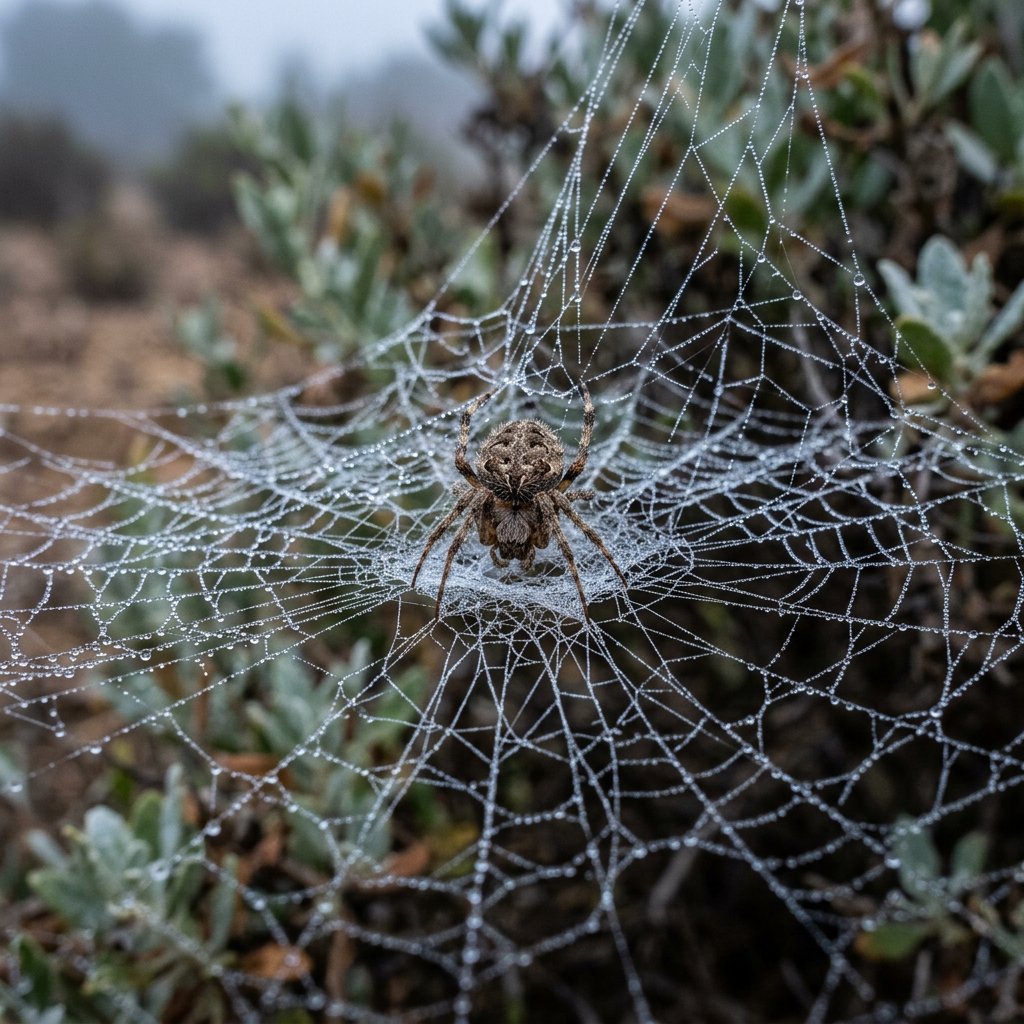
Often called the Tropical Tent-web Spider, this master architect is a common sight in warm climates around the globe. Despite its sharp, spiny appearance that might seem intimidating, it is a peaceful neighbor and a brilliant engineer. It earned its Latin name, citricola, due to its fondness for building its massive homes in citrus groves.
🔍 How to Identify
- 🕸️ The Web: Instead of the classic "sticky" flat web, this spider builds a massive, horizontal, 3D "tent" made of fine, non-sticky mesh that looks like a delicate lace hammock.
- 🌵 Spiny Abdomen: The female has a distinct, jagged abdomen with several pairs of "humps" or spines, giving her a rugged, prehistoric silhouette.
- 🎨 Color Shifting: Their color is highly variable; you might see them in sandy grey, earthy brown, or even a dramatic charcoal black to blend in with their surroundings.
🌲 Habitat & Ecology
- 🏘️ Social Neighbors: These spiders are "quasi-social." While each spider owns its own tent, they often build them right next to one another, creating massive communal "apartment complexes" that can cover entire bushes.
- 🦟 Pest Control: They are excellent at catching small flying insects like flies and moths. Because their silk isn't sticky, they rely on the sheer complexity of their "mesh" to tangle prey before they rush in.
⚠️ Safety & Toxicity
- 🛡️ Low Risk: The Tropical Tent-web Spider is considered harmless to humans. They are very shy and would much rather drop to the ground or hide in a "retreat" of dead leaves than bite.
- 🐕 Pet Friendly: They do not possess venom that is medically significant to dogs or cats. Their spines are purely for camouflage and protection against birds, not for injecting venom.
✨ Fun Fact
Unlike most orb-weaving spiders that have to rebuild their sticky webs every single night, the Cyrtophora citricola builds a permanent structure. Because the silk isn't sticky, it doesn't lose its effectiveness over time, allowing the spider to live in the same "house" for its entire adult life!
More Details








