Info
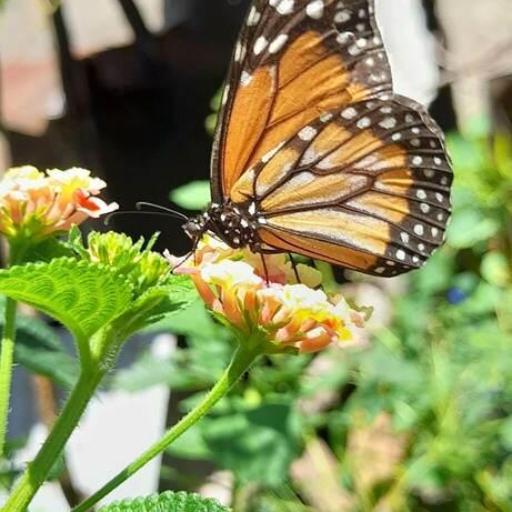
The Southern Monarch (Danaus erippus) is the royal traveler of the South American skies. Often mistaken for its famous northern cousin, this butterfly is a symbol of resilience and beauty across the southern continent, from Brazil to Argentina. It is a "friend" to any gardener, gliding gracefully through the air as a vital pollinator for native wildflowers.
🔍 How to Identify
- 🦋 Wing Patterns: It features vibrant orange-to-tawny wings laced with bold black veins. The outer edges are framed by a thick black border dotted with small white "pearls."
- 🎨 The "Frosted" Look: A key way to tell it apart from the North American Monarch is the color of the hindwing undersides, which often appear paler or more "frosted" in the Southern species.
- ⚪ Spotted Body: Its body is a deep, velvety black, decorated with tiny white dots that act as a high-contrast warning to hungry predators.
🌲 Habitat & Ecology
- 🌿 The Milkweed Bond: The Southern Monarch’s life is entirely tied to the Milkweed plant. Females lay their eggs exclusively on these leaves so the emerging caterpillars can feast on the plant's sap, which contains bitter toxins.
- 🌎 Southern Range: Unlike the famous multi-generational migration to Mexico, these butterflies stay within the warmer regions of South America. They thrive in open grasslands, pampas, and sun-drenched home gardens.
⚠️ Safety & Toxicity
- 🛡️ Chemical Defense: The Southern Monarch is completely harmless to humans; it does not bite, sting, or carry diseases. It is safe to observe and have in your garden.
- 🐾 Ingestion Risk: Because they eat toxic milkweed as caterpillars, the adult butterflies are poisonous to birds and small pets if eaten. The toxins (cardenolides) can cause heart distress or vomiting in animals, though most predators learn to avoid them after one bad-tasting bite.
✨ Fun Fact
🧬 Genetic Twins: For decades, scientists debated whether the Southern Monarch was a separate species or just a "lost" version of the North American Monarch. Modern DNA testing finally proved they are distinct species that evolved separately to rule their respective halves of the Western Hemisphere!
More Details








