Info
Often overlooked because of its tiny size, Dasineura urticae is the hidden architect behind those strange, swollen lumps frequently found on Stinging Nettles. Known as the Nettle Pouch Gall Midge, it turns a common weed into a custom-made nursery for its offspring. While the adult fly is a delicate, mosquito-like creature rarely seen by the naked eye, its "house-building" skills are a fascinating sight for any nature walker.
🔍 How to Identify
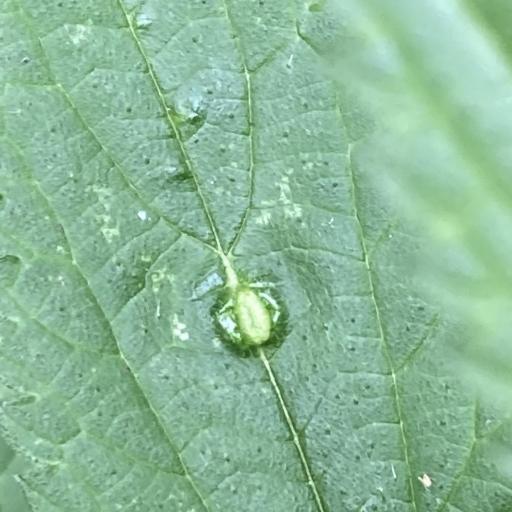
- 🌿 The Galls: Look for irregular, thickened pouches or "blisters" on the leaves, stems, or even the flower stalks of nettles. They look like the plant has developed tiny, swollen tumors.
- 🎨 Color Variation: These swellings are usually pale green but often develop striking reddish or purplish tints, making them stand out against the dark green foliage.
- 🐛 The Larvae: If you were to carefully peer inside a gall, you would find several tiny, legless larvae that change from a creamy white to a vibrant orange as they mature.
🌲 Habitat & Ecology
- 🕸️ A Nettle Specialist: This insect is a "host-specific" specialist; it lives its entire larval life exclusively on the Stinging Nettle (Urtica dioica). You’ll find them wherever nettles thrive, especially in damp, shady woodland edges or nitrogen-rich garden corners.
- 🏗️ Chemical Architecture: The midge doesn't just "live" in the plant; it hijacks it. By injecting specific chemicals while laying eggs, the insect tricks the nettle into growing extra tissue that wraps around the larvae, providing a fortress that is both a food source and a shield against the elements.
⚠️ Safety & Toxicity
- ✅ Harmless to Humans: The Nettle Gnat is completely harmless. It does not bite, sting, or carry any diseases that affect humans or pets.
- 🚫 The "Landlord" Danger: While the insect is safe, its home is not! Because these galls are found on Stinging Nettles, the primary risk is getting "stung" by the plant’s silica hairs. Always wear gloves if you intend to collect or inspect a gall closely.
✨ Fun Fact
The larvae of Dasineura urticae possess a unique organ called a "sternal spatula." This tiny, T-shaped bone-like structure on their chest helps them scrape at the plant tissue and eventually aids them in "springing" or burrowing out of the gall when it’s time to drop into the soil and transform into an adult fly.
More Details








