Info
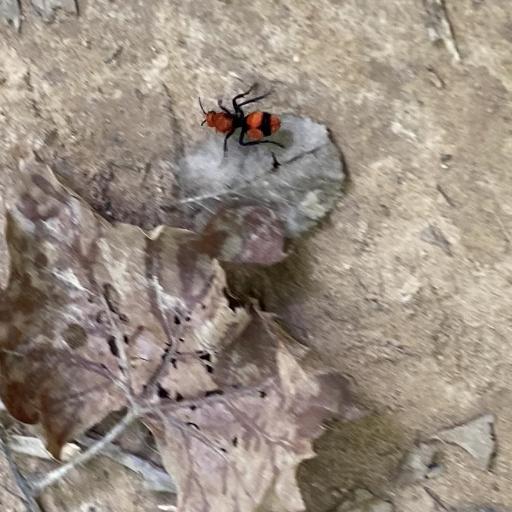
Often called the "Cow Killer," this striking insect is a master of deception. Despite its name and appearance, it isn’t an ant at all—it is a species of solitary wasp. Its fiery red-and-black velvet coat isn't just for show; it's nature's most vivid "Do Not Touch" sign, warning predators and curious humans alike of the powerful punch it packs.
🔍 How to Identify
- 🧶 Velvety Coat: The body is covered in dense, hair-like bristles, usually in brilliant shades of orange or scarlet contrasted with deep black bands.
- 🐜 Ant-like Shape: Females are wingless and spend their time scurrying across the ground, giving them their "ant" nickname.
- ✈️ Winged Males: Unlike the females, males have translucent, smoky-black wings and spend their time hovering over low vegetation looking for mates.
- 🛡️ Tough Armor: They possess an incredibly thick, hard exoskeleton that acts as a suit of plate mail against predators.
🌲 Habitat & Ecology
- 🏜️ Open Grounds: You are most likely to spot them in sunny, sandy areas, pastures, or along the edges of forests where the soil is loose.
- 🐝 The Invader: These wasps are "parasitoids." A female will sneak into the underground burrows of bumblebees or other wasps to lay her eggs on their larvae.
- 🎶 Squeaky Defense: If you get too close, the Cow Killer can produce a faint, high-pitched chirping or squeaking sound by rubbing its body segments together to warn you to back off.
⚠️ Safety & Toxicity
- 🦂 Severe Pain: The female possesses a very long, maneuverable stinger. While the venom isn't highly toxic to humans or livestock, the pain is legendary and ranked near the top of the Schmidt Sting Pain Index.
- 🚫 Hands-Off Policy: They are not aggressive and will usually try to run away. However, because they look like "fuzzy toys," children and pets are at risk. Always wear shoes in areas where they are active.
✨ Fun Fact
The Cow Killer's exoskeleton is so incredibly tough that entomologists often struggle to push a sharp steel pin through them when preparing specimens for museums—they have been known to bend the pins!
More Details








