Info
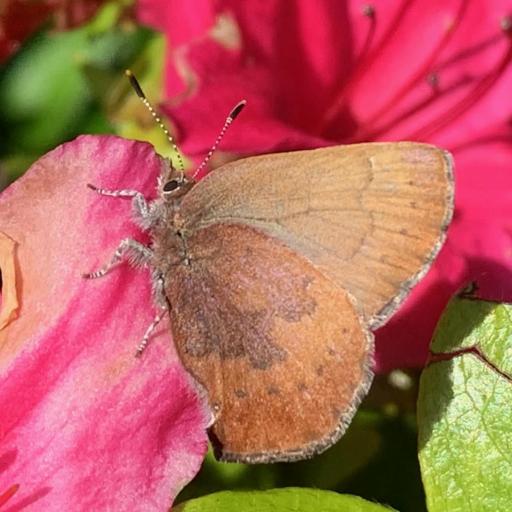
Known as the Brown Elfin, this tiny, subtle butterfly is a master of camouflage and one of the first heralds of spring. Often found dancing near blueberry bushes or resting on dried leaves, it mimics the color of the earth and dead foliage to hide from predators. While it lacks the flashy neon colors of tropical species, its intricate russet patterns and early-season appearance make it a prized find for nature watchers.
🔍 How to Identify
- 🦋 The "Dead Leaf" Look: When its wings are closed, it resembles a small, weathered brown leaf. The colors range from deep chocolate to a warm cinnamon-red.
- 🎨 Two-Tone Underwings: The most reliable marking is on the underside of the hindwing, which is divided into a dark, mottled inner half and a noticeably lighter, smoother outer half.
- 🚫 Tail-less Silhouette: Unlike many of its "hairstreak" relatives, the Brown Elfin does not have the tiny, hair-like tails at the back of its wings, giving it a rounded, compact profile.
🌲 Habitat & Ecology
- 🫐 Heathland Specialist: You will almost always find them near plants in the heath family (Ericaceae), such as blueberries, huckleberries, manzanitas, and rhododendrons.
- 🕒 Early Emergence: They are "univoltine," meaning they have only one brood per year. They emerge very early in spring, sometimes while a light frost is still possible, to take advantage of early blooms.
- 🪵 Low-Flying Perchers: They rarely fly high. Instead, they stay close to the ground, perching on twigs or stones in sun-drenched clearings to regulate their body temperature.
⚠️ Safety & Toxicity
- ✅ Gentle Neighbor: The Brown Elfin is entirely harmless. It does not bite, sting, or carry diseases.
- 🐶 Safe for Pets: They are not toxic to birds, cats, or dogs. In fact, they are a vital part of the local food web, providing a snack for early-season songbirds.
- 🌱 Garden Impact: While the caterpillars eat flower buds of host plants, they rarely occur in high enough numbers to damage your garden or ornamental shrubs.
✨ Fun Fact
Brown Elfin caterpillars are "flower-feeders." Instead of munching on tough green leaves, they prefer to bore into and eat the developing flower buds of blueberries. They are essentially eating the most nutrient-rich part of the plant!
More Details







