Info
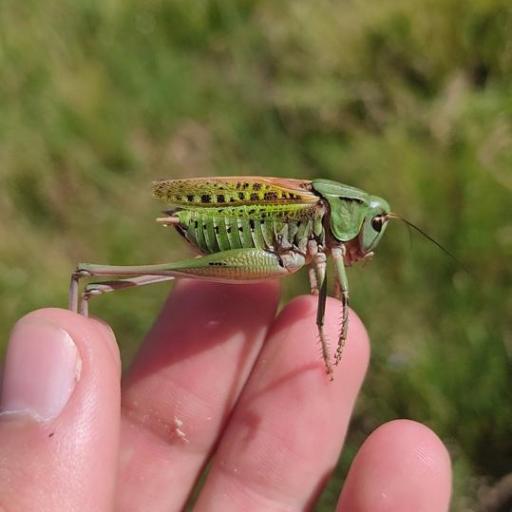
Known historically as the "Wart-biter," this impressive bush-cricket is one of the largest and rarest insects found in temperate Europe and Asia. Its name isn't a coincidence; it stems from an 18th-century Swedish folk practice where the cricket was encouraged to bite skin warts to "cure" them with its caustic digestive enzymes. While it looks like a formidable prehistoric survivor, it is a shy creature that serves as a vital indicator of a healthy, biodiverse ecosystem.
🔍 How to Identify
- 🦗 Robust Profile: Unlike the slender garden crickets you might be used to, the Wart-biter has a very thick, heavy-set body and a large, square-looking head.
- 🎨 Speckled Camouflage: Its body is typically deep green or earthy brown, but it is always covered in distinct dark-brown or black square spots that help it blend into the shadows of meadow grasses.
- ⚔️ Powerful Mandibles: It possesses exceptionally large, dark jaws. These are not for show; they are functional tools used for both hunting and self-defense.
🌲 Habitat & Ecology
- ☀️ The Sun-Seeker: This insect is "thermophilous," meaning it craves heat. You will most likely find them in "mosaic" habitats—areas that offer a mix of tall grass for hiding and patches of bare soil or rock where they can bask in the midday sun.
- 🍽️ A Meadow Predator: While they do eat plants, Wart-biters are primarily predatory. They are the "lions" of the grass, stalking and capturing other grasshoppers and small insects, which they pull apart with their strong jaws.
⚠️ Safety & Toxicity
- 👄 The "Bite" Factor: True to its name, this insect can deliver a powerful and painful pinch if handled. While it is not venomous and has no stinger, its jaws are strong enough to break the skin of a human finger.
- 🛡️ Defense Fluid: When threatened, they may regurgitate a dark brownish liquid from their crop. This is a harmless deterrent intended to gross out birds and small mammals, but it can stain clothing.
✨ Fun Fact
The "song" of the male Wart-biter is unique; it sounds like a high-pitched, rapid-fire clicking, often compared to the sound of a vintage sewing machine or a Geiger counter. It is so high-frequency that some older adults lose the ability to hear it entirely!
More Details








