Info
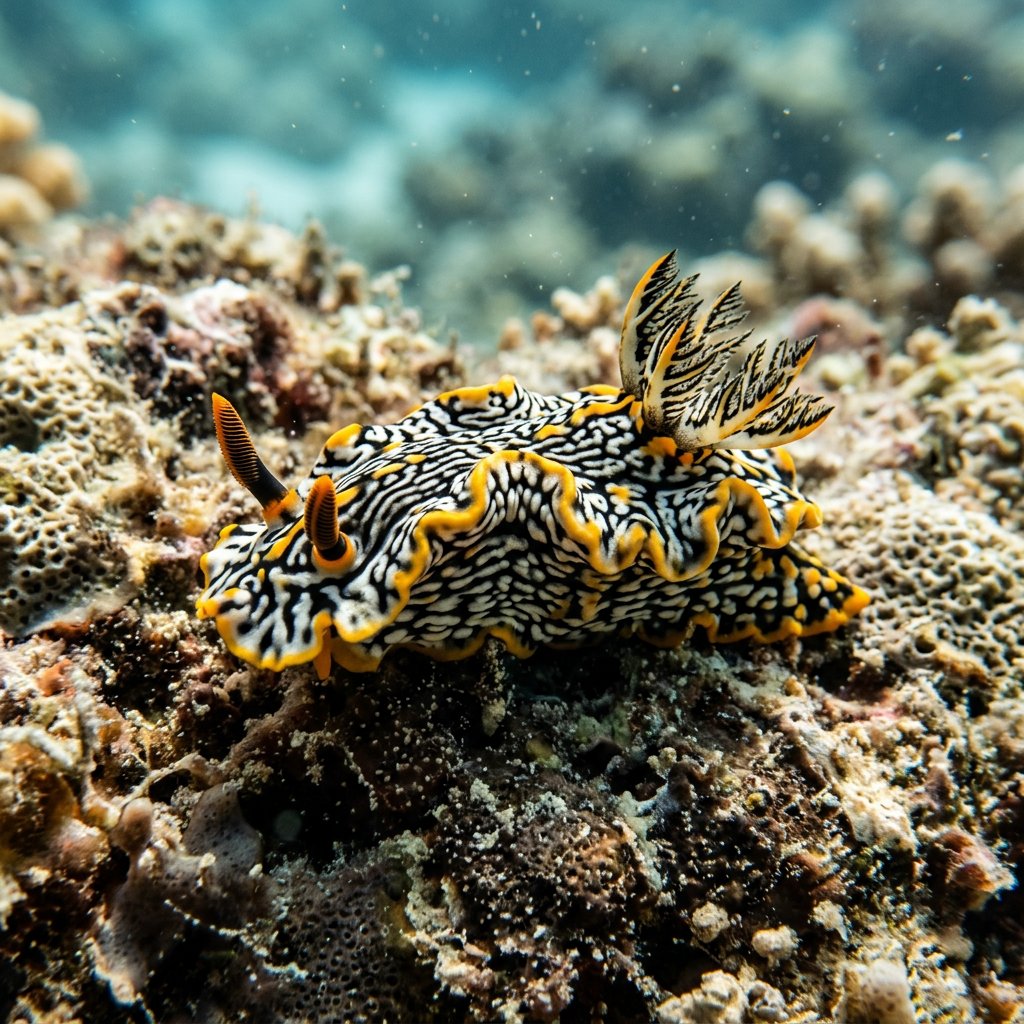
Often called the Brindled Nudibranch, this fascinating creature is actually a marine sea slug rather than an insect! Found gliding through the shallow reefs and tide pools of the Indo-Pacific, its velvet-like body and ruffled edges make it look like a piece of living lace or a floating autumn leaf drifting along the ocean floor.
🔍 How to Identify
- 🌊 Mantle Skirt: It possesses a broad, oval body with highly ruffled or "undulating" edges that give it a delicate, skirt-like appearance as it moves.
- 🎨 Color Pattern: Typically features a soft tan or sandy-brown base covered with dark, velvety spots and intricate "brindled" markings that provide excellent camouflage against coral rubble.
- 🪶 Branchial Plume: On its lower back, you will see a circular tuft of feathery gills that looks like a tiny, retractable underwater flower.
🌊 Habitat & Ecology
- 🪸 Reef Dweller: These slugs are masters of the intertidal zone, often found hiding under rocks or deep within coral crevices during low tide to stay cool and moist.
- 🧽 Sponge Specialist: While many land slugs eat garden plants, this marine beauty feeds exclusively on toxic sponges, cleverly recycling the sponge's chemical defenses for its own protection.
⚠️ Safety & Toxicity
- 🚫 Toxic if Ingested: While it cannot bite or sting, it is highly toxic if eaten. It stores concentrated chemicals from its diet to ensure that any fish attempting a snack quickly regrets it.
- 🧴 Handle with Care: It is generally safe to look at, but touching is discouraged. Their skin is incredibly delicate, and chemicals from human hands (like sunscreen or oils) can harm their respiratory system.
✨ Fun Fact
The two "antennae" on its head are called Rhinophores, and they act like a high-tech nose! They allow the nudibranch to "smell" chemical trails in the water, helping it track down a mate or its favorite sponge meal from several feet away.
More Details








