Info
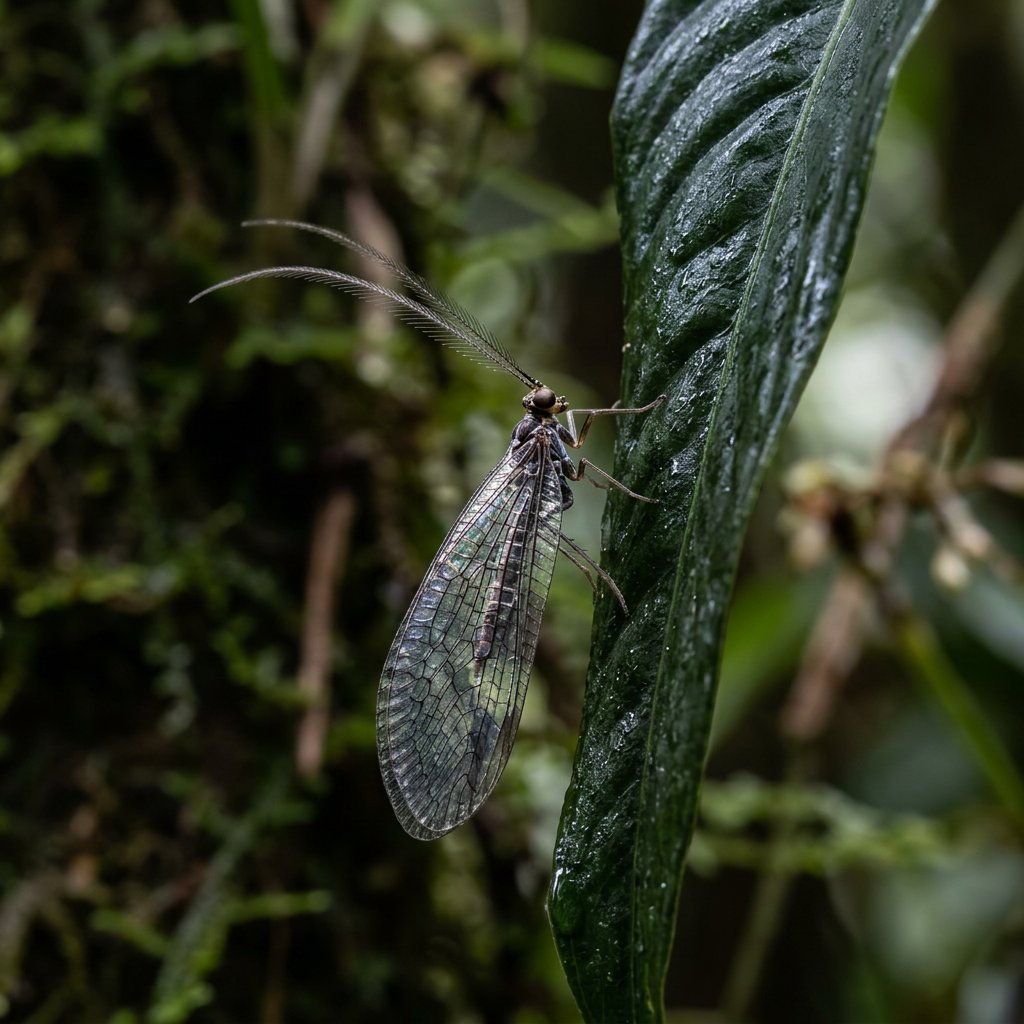
Often called "Lace-winged Planthoppers," the members of the Derbidae family are among the most ethereal and delicate-looking insects you’ll find in the garden. Often mistaken for tiny moths or even miniature butterflies due to their vibrant wing patterns and graceful rest poses, these insects are actually expert sap-suckers. In many cultures, their presence is seen as a sign of a healthy, damp ecosystem where nature’s recycling process is in full swing.
🔍 How to Identify
- 🦋 Exaggerated Wings: Their wings are significantly longer than their bodies, often featuring intricate veining, colorful spots, or a "frosted" translucent appearance.
- 📐 Resting Posture: Unlike most planthoppers that hold their wings like a tent, many Derbids hold them out horizontally or at a wide V-angle, mimicking a moth.
- 👁️ Unique Faces: They possess the classic planthopper "snout," with eyes positioned on the sides of the head and antennae tucked tucked just below the eyes.
🌲 Habitat & Ecology
- 🍄 The Fungus Connection: Uniquely, Derbid nymphs (juveniles) do not eat plants; they live in rotting wood or leaf litter, feeding on the underground threads of fungi (mycelium).
- 🍃 Adult Diet: Once they mature and grow wings, they move to the undersides of leaves—particularly palms and ferns—to feed on plant sap, though they rarely cause significant damage to the host.
⚠️ Safety & Toxicity
- ✅ Status: Completely Harmless.
- 🛡️ Details: Derbids do not bite, sting, or carry diseases that affect humans or pets. They are gentle "sit-and-wait" insects that rely on camouflage and quick jumps to escape predators.
✨ Fun Fact
While most of their planthopper cousins are strictly "vegans" their whole lives, Derbid nymphs are specialized "fungivores." This means you’ll only find these beautiful adults in areas where the soil or fallen logs are rich enough to support fungal growth!
More Details








